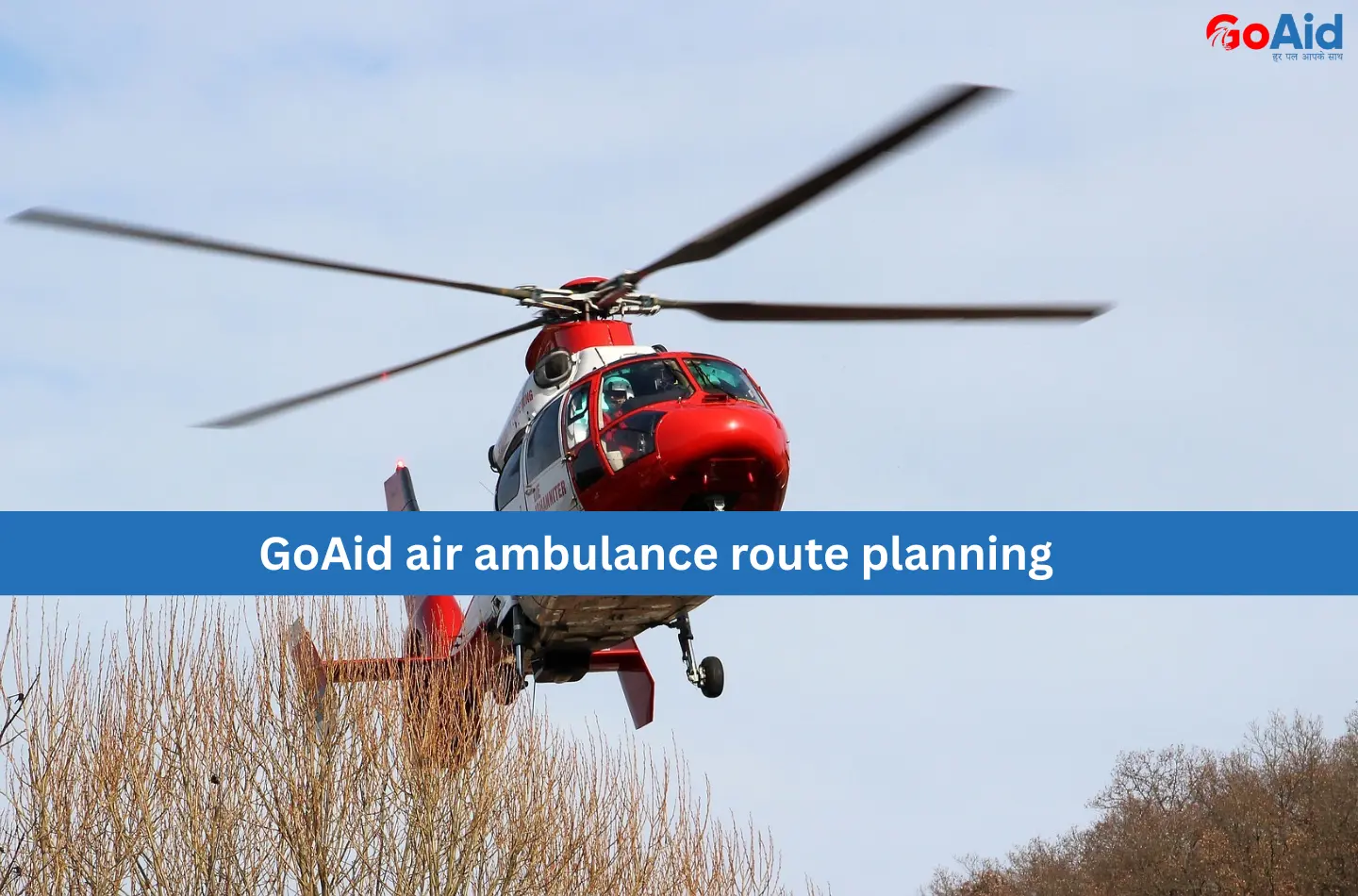
Air ambulance route planning
Time is critical when it comes to medical emergencies, and knowing how air ambulances plan their routes can make all the difference in saving lives. Many people are unaware of the complex logistics involved. This includes assessing patient urgency, airport accessibility, weather, and air traffic. Understanding GoAid’s route planning process helps families and caregivers feel confident that patients reach the hospital as quickly and safely as possible.
This is why, in this blog, we have explained all the details about how GoAid assesses distance and medical urgency for transfers, selects the nearest suitable airports, factors in weather and air traffic, coordinates with aviation authorities, and optimizes routes for the fastest hospital reach. Do you want to know all these information in detail? Then read this blog to the end.
So, let’s start:
How Are Distance and Medical Urgency Assessed for Air Transfers?
Effective air ambulance route planning begins with accurately balancing medical urgency and travel distance. GoAid air ambulance carefully evaluates patient condition, time sensitivity, and geographic factors to design the fastest and safest emergency medical flight plan.
1. Evaluation of Patient Criticality
GoAid medical teams assess how life-threatening the condition is, prioritizing cases like cardiac arrest, trauma, or organ failure where every minute saved can impact survival.
2. Time-Sensitive Treatment Requirements
Certain treatments such as stroke thrombolysis or emergency surgery have strict time windows. This makes rapid air evacuation essential despite longer distances.
3. Distance vs. Road Transfer Comparison
Route planners compare road travel time with air distance to determine whether an air ambulance will significantly reduce transfer duration.
4. Availability of Specialized Hospitals
If advanced care is unavailable locally, GoAid prioritizes rapid air transfer to the nearest suitable tertiary care center.
5. Patient Stability Assessment
Medical stability determines whether high-speed transfer is safe, influencing route choice and cruising altitude during flight planning.
6. Onboard Medical Support Level
The need for ICU, ventilator, or neonatal support affects how quickly and directly the route must be executed.
7. Emergency Escalation Risk
Patients at risk of sudden deterioration are routed through the fastest possible flight path to reduce in-air complications.
8. Coordination with Receiving Hospital
Advance confirmation of bed availability ensures no time is wasted after landing.
9. Ground Ambulance Integration
Uninterrupted coordination with ground ambulances minimizes delays at both departure and arrival points.
10. Overall Time-to-Care Calculation
GoAid calculates total door-to-door transfer time, not just flight duration. This ensures true time-saving air ambulance service.
Know More:Night-time air ambulance missions
How Are the Nearest Suitable Airports Selected?
Selecting the right airports is critical for minimizing transfer time in emergency medical flights. GoAid air ambulance focuses on accessibility, safety, and proximity to hospitals during route planning.
1. Distance from Referring and Receiving Hospitals
Airports closest to hospitals are prioritized to reduce ground transfer time before and after the flight.
2. Runway Compatibility and Availability
Only airports capable of handling air ambulance aircraft and night operations are considered.
3. Operating Hours and Permissions
GoAid selects airports with 24/7 operational clearance to avoid scheduling delays.
4. Ground Ambulance Accessibility
Airports with smooth ambulance entry and exit routes are chosen for faster patient movement.
5. Emergency Handling Readiness
Airports with quick ATC coordination and emergency handling facilities ensure rapid turnaround.
How Do Weather and Air Traffic Conditions Affect Route Planning?
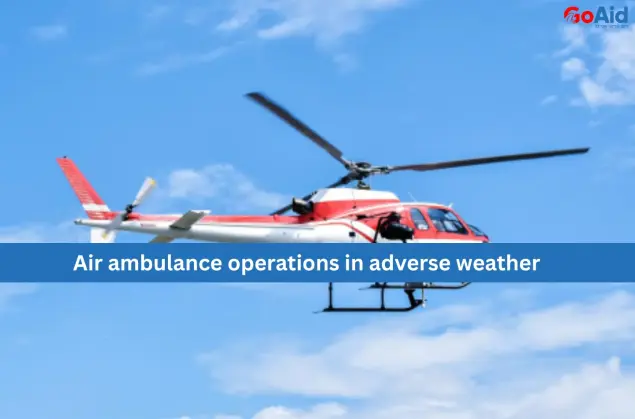
Weather and air traffic play a major role in emergency medical flight planning. GoAid air operations continuously monitor real-time weather data. This includes wind patterns, visibility, storms, and turbulence risks. Adverse weather may require route deviations or altitude adjustments to maintain patient safety without causing delays.
Air traffic congestion around major airports can also affect flight paths. GoAid coordinates closely with air traffic control to secure priority routing and optimal flight corridors. In some cases, alternative airports or less congested airspaces are chosen to save time.
By combining meteorological analysis with aviation coordination, GoAid ensures that air ambulance routes remain fast, safe, and reliable—delivering critically ill patients to advanced medical care in the shortest possible time.
How Does GoAid Coordinate with Aviation Authorities?
GoAid air ambulance works in close coordination with multiple aviation authorities to ensure smooth, fast, and compliant medical flight operations. Before every mission, GoAid’s air operations team communicates with airport authorities, air traffic control (ATC), and aviation regulators to obtain necessary clearances.
Emergency medical flights are planned with priority routing wherever permitted. This helps reduce holding time and delays. GoAid also coordinates slot permissions, runway availability, and night operation approvals to avoid last-minute disruptions.
Real-time communication with ATC during flight allows dynamic adjustments in altitude or route when required. By maintaining strong coordination with aviation authorities across India, GoAid ensures that emergency medical flight planning remains efficient, lawful, and focused on saving critical time for patients.
How Are Routes Optimized for Faster Hospital Reach?
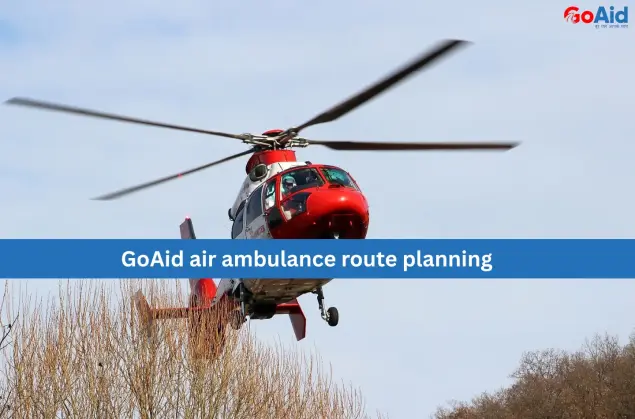
Route optimization in GoAid air ambulance services focuses on reducing total door-to-door transfer time rather than just flight duration. The process begins by selecting the closest suitable airport to both the referring and receiving hospitals.
Ground ambulance routes are planned in advance to ensure quick patient movement between hospital and aircraft. GoAid also evaluates direct flight paths. This avoids unnecessary layovers or congested airspaces whenever possible.
Continuous coordination with hospitals ensures immediate patient handover upon landing. In urgent cases, alternative airports or helipads nearer to hospitals are considered. This integrated approach ensures that patients reach advanced medical care in the shortest possible time.
Conclusion
In conclusion, we have provided all the details about how GoAid air ambulance plans and optimizes routes to save maximum time. From assessing medical urgency and distance to selecting suitable airports, monitoring weather, managing air traffic, and coordinating with aviation authorities, every step is carefully executed.
By focusing on total transfer time and uninterrupted hospital access, GoAid ensures fast, reliable, and patient-focused emergency medical flight planning across India.
FAQs
Q1: How are air ambulance routes planned?
A: Air ambulance routes are planned by assessing patient urgency, distance, hospital availability, weather conditions, air traffic, and airport accessibility to ensure the fastest and safest medical transfer.
Q2: Does GoAid choose routes based on medical urgency?
A: Yes, medical urgency is a primary factor in GoAid air ambulance route planning, especially for time-critical cases like trauma, stroke, cardiac emergencies, and organ transplants.
Q3: What role does weather play in route planning?
A: Weather affects visibility, turbulence, and flight safety. GoAid monitors real-time weather data to adjust routes or altitudes while maintaining timely and safe air medical transport.
Q4: How does GoAid reduce travel time in emergencies?
A: GoAid reduces travel time by selecting nearby airports, coordinating ground ambulances, securing aviation clearances quickly, and optimizing direct flight paths.
Q5: Are air ambulance routes flexible during flight?
A: Yes, routes remain flexible during flight. GoAid coordinates with air traffic control to make real-time adjustments if weather, air traffic, or medical urgency changes.