Air ambulance aircraft selection
Choosing the right type of aircraft for air ambulance transfers can directly impact patient outcomes, yet many people are unaware of how these decisions are made. Understanding whether a helicopter or fixed-wing aircraft is used is important because it ensures patients receive the most suitable, safe, and timely care based on their medical condition, urgency, and distance to the hospital.
This is why, in this blog, we have explained all the details about how GoAid assesses medical condition and urgency, considers distance and terrain, decides when helicopters are used for short-range emergencies, why fixed-wing aircraft are preferred for long-distance transfers, and how operational factors and airport availability influence these critical decisions. Do you want to know all these information in detail? Then read this blog to the end.
So, let’s start:
How Are Medical Conditions and Urgency Assessed?
Choosing between a helicopter ambulance and a fixed-wing aircraft begins with a detailed evaluation of the patient’s medical condition and urgency. GoAid air ambulance follows a structured clinical assessment process to determine how quickly the patient needs advanced medical care and what level of in-flight support is required.
Critical factors such as diagnosis, vital stability, oxygen dependency, ventilator support, cardiac monitoring needs, and risk of sudden deterioration are carefully reviewed by experienced doctors and paramedics.
Time-sensitive conditions like stroke, cardiac emergencies, severe trauma, and organ transplant cases are prioritized for the fastest possible mode of air medical transport. If immediate intervention is required and the distance is short, helicopter ambulance services are often preferred due to rapid deployment and direct hospital access.
For longer distances where patient stability must be maintained over extended flight durations, fixed-wing air ambulances with full ICU setups are considered more suitable.
GoAid also evaluates whether the patient can tolerate altitude changes, longer flight times, or limited cabin space. This patient-first assessment ensures the chosen aircraft aligns perfectly with medical urgency, safety, and care requirements.
How Do Distance and Terrain Influence Aircraft Selection?
Distance and terrain play a crucial role in deciding the most effective air ambulance aircraft. GoAid air medical transport carefully evaluates geographic and environmental factors to ensure timely and safe patient transfer.
1. Short-Distance Emergency Transfers
For short-range missions within cities or nearby regions, GoAid helicopter ambulances are preferred due to faster takeoff and landing capabilities.
2. Long-Distance Intercity Transfers
Fixed-wing air ambulances are ideal for covering long distances efficiently. This ensures patient comfort and continuous ICU-level care.
3. Remote and Difficult Terrain Access
Helicopters are selected for mountainous, rural, or disaster-affected areas where airports are unavailable.
4. Airport Availability and Proximity
Fixed-wing aircraft require operational airports, influencing aircraft choice based on landing infrastructure.
5. Urban Traffic and Time Constraints
Helicopters bypass road congestion and land closer to hospitals, saving critical time in dense urban environments.
6. Weather and Airspace Restrictions
Terrain combined with weather conditions affects flight safety, influencing aircraft suitability.
7. Ground Ambulance Integration
The distance between aircraft landing points and hospitals determines whether helicopter or fixed-wing transfer is more time-efficient.
When Are Helicopters Used for Short-Range Emergencies?
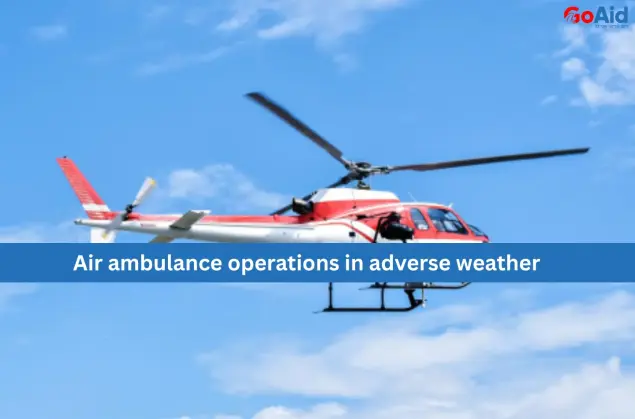
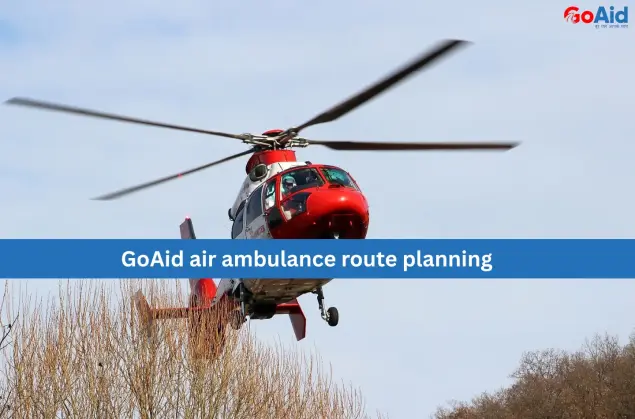
Helicopter ambulances are deployed when rapid response, direct access, and minimal transfer time are critical. GoAid helicopter ambulance services are specially used for short-range emergencies where every minute can significantly affect patient survival and outcomes.
1. Urban Medical Emergencies with Heavy Traffic
In densely populated cities, traffic congestion can delay road ambulances. GoAid helicopter ambulances bypass roadblocks entirely. This ensures faster transport for cardiac arrests, strokes, and severe trauma cases.
2. Accident and Trauma Scene Evacuations
Helicopters are used to evacuate patients directly from accident sites, highways, or industrial areas where immediate medical intervention and rapid transfer to trauma centers are required.
3. Hospital-to-Hospital Transfers within Short Distance
For nearby hospital transfers requiring urgent advanced care, helicopters provide quick point-to-point transport, especially when both hospitals have helipad facilities.
4. Remote or Inaccessible Location Rescue
In rural, hilly, forested, or disaster-affected areas with limited road connectivity, helicopter ambulances ensure timely patient evacuation when ground access is difficult or impossible.
5. Time-Critical Neurological and Cardiac Cases
Helicopters are preferred for stroke, brain injury, and cardiac emergencies where reaching a specialized facility within the golden hour is medically crucial.
6. Disaster and Emergency Response Operations
During floods, earthquakes, or large-scale emergencies, helicopters enable rapid evacuation when roads are damaged or overwhelmed.
7. Limited Airport Infrastructure Availability
When fixed-wing aircraft cannot operate due to lack of nearby airports, helicopters provide flexible landing options close to patient locations.
8. Short-Distance Transfers with Extreme Urgency
For distances where aircraft preparation time could cause delays, helicopters offer quicker deployment and immediate lift-off capability.
9. Night-Time Emergency Medical Missions
Equipped for night operations, helicopters are used for urgent rescues when immediate transfer cannot wait until daylight hours.
10. Rapid Deployment of Medical Teams
Helicopters allow GoAid to quickly deploy doctors and paramedics to stabilize patients at the scene before onward transfer.
Read More: Emotional care in air ambulance transfers
Why Are Fixed-Wing Aircraft Preferred for Long-Distance Transfers?
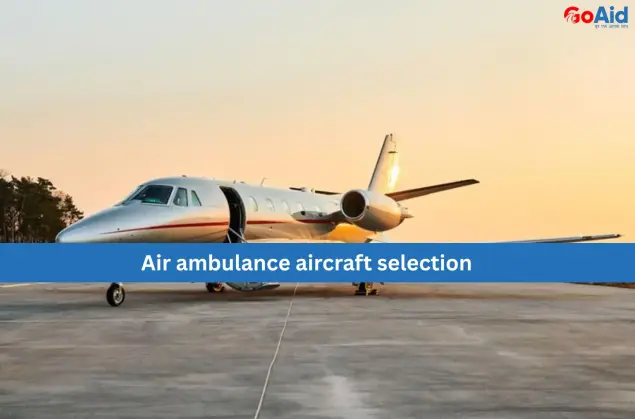
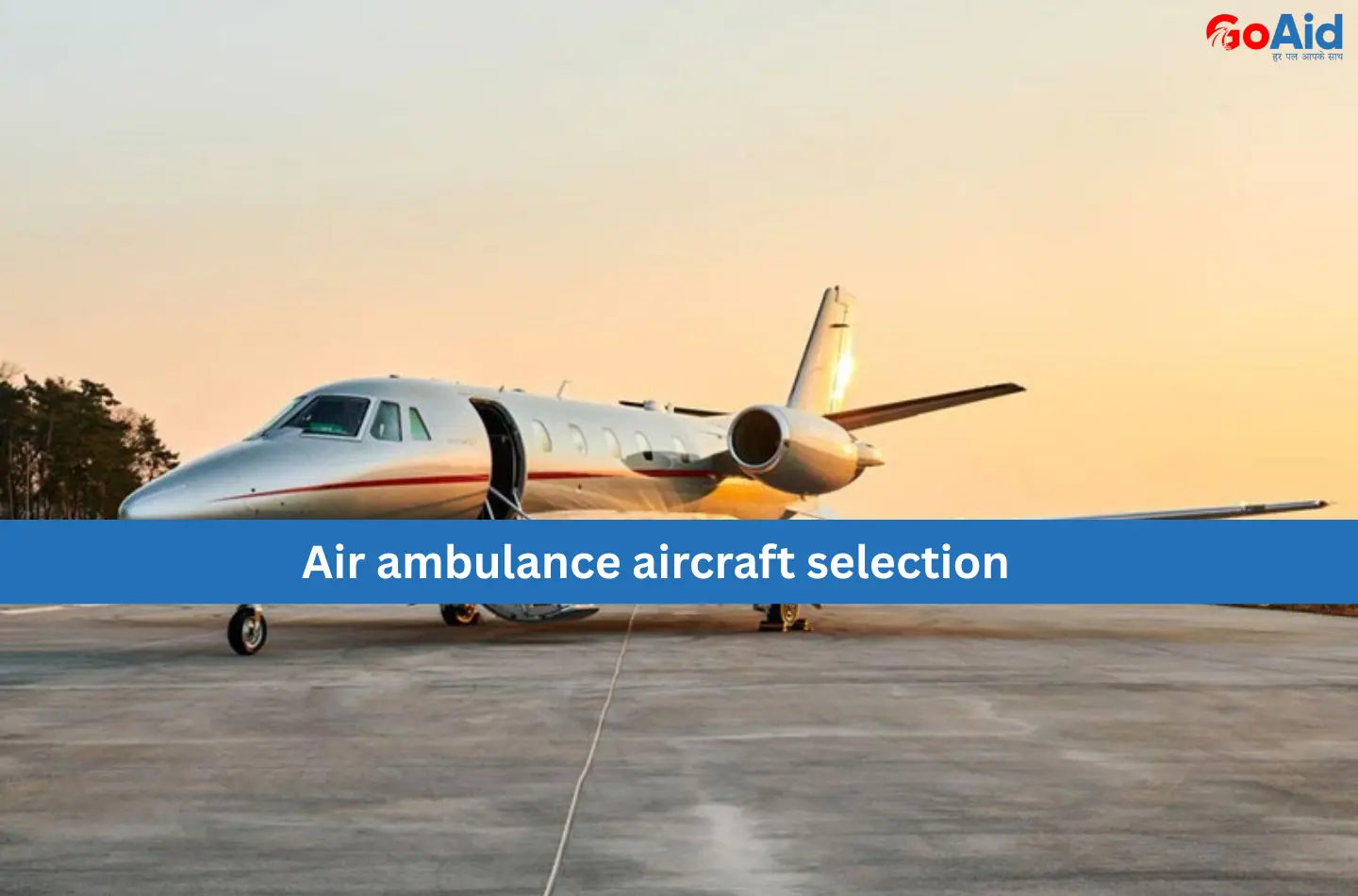
Fixed-wing air ambulances are best suited for long-distance medical evacuations due to their speed, endurance, and advanced medical infrastructure. GoAid uses fixed-wing aircraft for safe and efficient intercity and interstate patient transfers.
1. Ability to Cover Long Distances Efficiently
Fixed-wing aircraft can travel long distances quickly and nonstop. This makes them ideal for interstate and cross-country air ambulance missions.
2. Spacious ICU-Configured Cabins
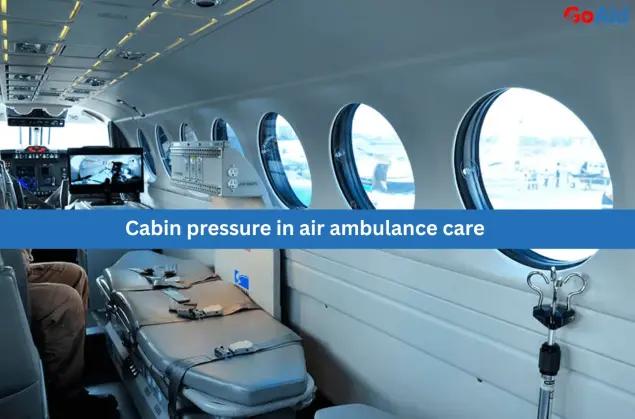
The larger cabin space allows installation of full ICU equipment. This enables continuous critical care throughout extended flight durations.
3. Enhanced Patient Comfort and Stability
Smoother flight dynamics reduce turbulence and physiological stress, which is crucial for critically ill or post-surgical patients.
4. Higher Oxygen and Power Capacity
Fixed-wing aircraft support prolonged oxygen supply and multiple medical devices without interruption during long flights.
5. Cost-Effectiveness for Extended Transfers
For long-range evacuations, fixed-wing air ambulances are more economical compared to helicopter operations.
6. Better Performance at Higher Altitudes
These aircraft are designed for efficient high-altitude cruising. This supports stable cabin pressure and improved air medical safety.
7. Greater Endurance in Variable Weather Conditions
Fixed-wing aircraft offer superior range and endurance. This allows safer operations across diverse weather patterns and long distances.
How Do Operational and Airport Availability Factors Affect Decisions?
Operational feasibility and airport infrastructure play a decisive role when selecting between helicopter and fixed-wing air ambulances. GoAid air ambulance carefully evaluates aviation logistics, ground access, and operational readiness to ensure time-efficient and safe medical transport.
1. Availability of Nearby Operational Airports
Fixed-wing air ambulances require functional airports with suitable runways. If no nearby airport is available close to the patient or receiving hospital, GoAid prefers helicopter ambulance services for faster access.
2. Presence of Hospital Helipads
When hospitals have operational helipads, helicopters enable direct rooftop landings, eliminating ground transfer delays and improving response time during critical medical emergencies.
3. Airport Operating Hours and Permissions
Airport timings, night operation approvals, and emergency permissions influence aircraft choice, especially during late-night or early-morning medical evacuations.
4. Ground Ambulance Accessibility and Traffic Flow
Heavy traffic or poor road connectivity between airports and hospitals may favor helicopter use. This reduces overall transfer time and logistical complexity.
5. Aircraft Readiness and Crew Availability
Immediate availability of aircraft, pilots, and medical crew determines whether a helicopter or fixed-wing aircraft can be deployed without delay.
Conclusion
In conclusion, we have provided all the details about how GoAid air ambulance decides between helicopter and fixed-wing aircraft for medical evacuations. From assessing patient condition, urgency, distance, and terrain to evaluating operational feasibility and airport availability, every decision is patient-centric and safety-driven.
By carefully balancing medical needs with aviation logistics, GoAid ensures the fastest, safest, and most effective air medical transport solution. This structured approach highlights GoAid’s expertise in emergency medical aviation across India.
FAQs
Q1: When does GoAid use a helicopter ambulance?
A: GoAid uses helicopter ambulances for short-distance emergencies, urban transfers, remote area rescues, disaster response, and situations requiring rapid access where airports are unavailable or road travel would cause delays.
Q2: What situations require a fixed-wing air ambulance?
A: Fixed-wing air ambulances are used for long-distance intercity or interstate transfers where extended ICU-level care, greater cabin space, and flight endurance are required for patient safety.
Q3: How does distance affect aircraft selection?
A: Short distances with extreme urgency usually favor helicopters, while longer distances are better handled by fixed-wing aircraft due to higher speed, efficiency, and patient comfort over extended flights.
Q4: Are helicopters faster than fixed-wing aircraft?
A: Helicopters are faster for short-range missions due to quick deployment and direct access, but fixed-wing aircraft are significantly faster and more efficient for long-distance medical transfers.
Q5: Who makes the final aircraft decision?
A: The final aircraft decision is made collaboratively by GoAid’s medical team, flight operations experts, and pilots, based on patient condition, urgency, distance, safety, and operational feasibility.