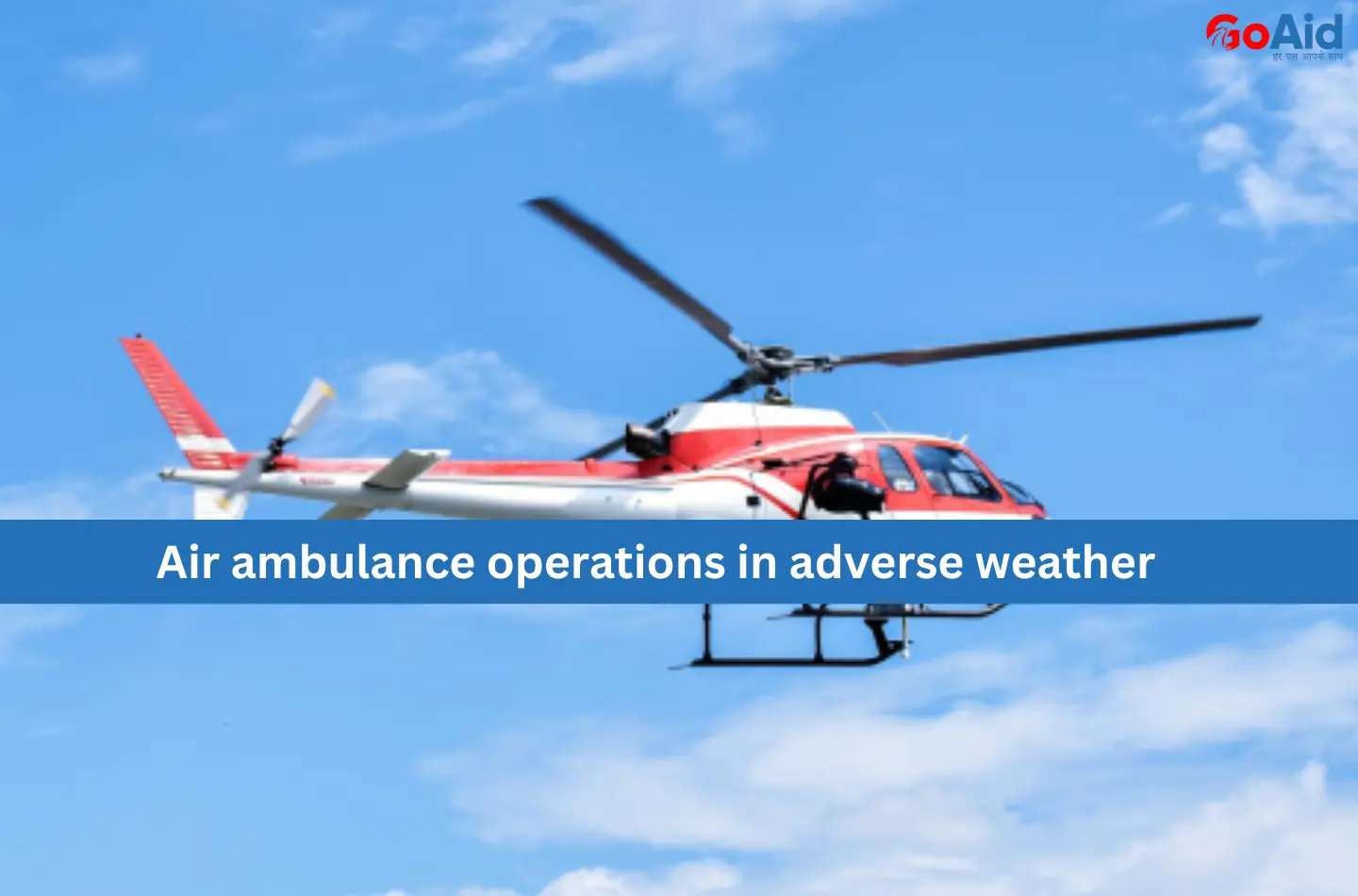
Air ambulance operations in adverse weather
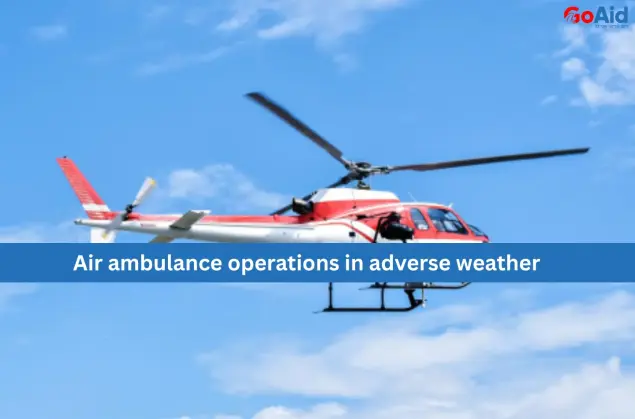
Adverse weather and low visibility can pose serious challenges during air ambulance transfers, yet many people are unaware of how medical flights continue to operate safely under such conditions. Understanding GoAid’s approach to flying in bad weather is important because it highlights the measures taken to protect patients, medical teams, and ensure timely transfers even when conditions are difficult.
This is why, in this blog, we have explained all the details about how GoAid assesses weather risks before medical flights, uses low-visibility navigation protocols, makes safety-first go/no-go decisions, prepares medical teams for delays, and coordinates with aviation and meteorological authorities. Do you want to know all these information in detail? Then read this blog to the end.
So, let’s start:
How Is Weather Risk Assessed Before Medical Flights?
Operating an air ambulance during adverse weather requires precise risk evaluation and responsible decision-making. GoAid air ambulance follows a structured weather risk assessment process before every medical flight to ensure patient and crew safety.
The assessment begins with detailed analysis of real-time meteorological data. This includes wind speed, cloud cover, visibility, turbulence forecasts, and storm activity along the planned route. Multiple weather sources are cross-verified to avoid reliance on a single data point.
GoAid flight operations teams evaluate weather conditions at the departure airport, en-route airspace, and destination airport. This ensures no weak links exist in the transfer chain.
Special attention is given to low-visibility conditions, fog formation, icing risks, and sudden weather deterioration that could affect safe landing. Pilots and medical coordinators jointly assess whether patient condition allows slight delays or route adjustments if weather risks increase.
Importantly, GoAid prioritizes safety over urgency when weather thresholds are exceeded. Alternate routes, airports, or rescheduling options are discussed transparently with medical teams and families. This disciplined approach ensures responsible emergency air ambulance operations even during challenging weather conditions.
What Low-Visibility Navigation and Instrument Protocols Are Used?
Low-visibility operations demand advanced navigation systems and strict aviation protocols. GoAid air ambulance relies on internationally approved low-visibility procedures to maintain safety, accuracy, and reliability during emergency medical flights.
1. Instrument Flight Rules (IFR) Operations
GoAid aircraft operate under IFR during low visibility. This allows pilots to rely entirely on cockpit instruments rather than external visual references for safe navigation.
2. Advanced GPS-Based Navigation Systems
High-precision GPS systems provide accurate positioning, route guidance, and situational awareness even in fog, clouds, or night conditions.
3. Enhanced Terrain Awareness and Warning Systems (TAWS)
TAWS alerts pilots about nearby terrain or obstacles. This reduces collision risk during low-visibility approaches and landings.
4. Weather Radar Integration
Onboard weather radar helps pilots detect storm cells, turbulence, and precipitation. This enables proactive route adjustments during adverse conditions.
5. Continuous Air Traffic Control Coordination
Constant communication with ATC ensures priority routing, real-time updates, and safe separation from other aircraft in congested or poor-visibility airspace.
6. Standardized Low-Visibility Approach Procedures
GoAid follows approved low-visibility landing and approach protocols. This minimizes risk during descent and runway alignment.
7. Redundant Navigation Instruments
Backup navigation and communication systems ensure operational continuity if any primary system underperforms.
8. Strict Pre-Flight Instrument Checks
All navigation and flight instruments are thoroughly checked before departure to ensure reliability during challenging weather conditions.
Also Read: Emotional care in air ambulance transfers
How Are Safety-First Go/No-Go Decisions Made?
Safety-first go/no-go decisions are a critical part of GoAid air ambulance operations, especially during bad weather and low-visibility conditions. These decisions are never based on urgency alone. GoAid follows a multi-layered decision-making framework that prioritizes patient, crew, and aircraft safety above all else.
Before every flight, pilots conduct a detailed risk assessment using updated weather forecasts, visibility reports, wind data, and NOTAMs. Simultaneously, medical teams evaluate patient stability and tolerance to potential delays. Flight dispatchers and operations managers review airport conditions, runway availability, and alternate landing options.
If weather parameters fall outside safe operational limits, GoAid initiates a no-go decision without hesitation. Families and hospitals are informed transparently, with alternative plans such as delayed departure, route modification, or ground transfer explored. This disciplined approach ensures that emergency air ambulance services remain responsible, ethical, and safety-driven even under pressure.
How Is the Medical Team Prepared During Weather Delays?
Weather delays can increase medical risk if not managed carefully. GoAid air ambulance ensures its medical teams remain fully prepared to maintain patient safety and continuity of care during weather-related postponements.
1. Continuous Patient Monitoring
Medical teams closely monitor vital signs, oxygen levels, and stability to ensure patient condition remains controlled during delays.
2. Stabilization and Reassessment Protocols
Doctors reassess patient condition regularly, adjusting medications, oxygen support, or ventilation as required.
3. Emergency Medication Readiness
Critical drugs and emergency kits are kept readily available to manage sudden deterioration during waiting periods.
4. Clear Communication with Hospitals
Medical teams coordinate with referring and receiving hospitals to align care plans during weather delays.
5. Psychological Reassurance for Patients
Calm and empathetic communication helps reduce patient anxiety during prolonged waiting times.
6. Coordination with Flight Operations
Medical teams remain in constant contact with flight operations for real-time weather and timing updates.
7. Fatigue and Resource Management
Shift planning and team readiness protocols ensure medical staff remain alert and effective throughout delays.
Conclusion
In conclusion, we have provided all the details about how GoAid air ambulance operates during bad weather and low-visibility conditions. From structured weather risk assessment and advanced navigation protocols to disciplined go/no-go decisions and well-prepared medical teams, every step is guided by safety-first principles.
GoAid prioritizes patient well-being over urgency. This ensures transparent communication and responsible decision-making. This commitment to air medical safety protocols allows GoAid to deliver reliable emergency air ambulance services in India, even under challenging weather conditions.
FAQs
Q1: Can air ambulances fly in bad weather?
A: Air ambulances can operate in certain adverse weather conditions if safety limits are met. However, flights proceed only after thorough risk assessment, and operations are paused if weather conditions exceed safe aviation thresholds.
Q2: How does GoAid handle low visibility conditions?
A: GoAid uses instrument flight rules, advanced navigation systems, real-time weather monitoring, and constant ATC coordination to manage low-visibility conditions while maintaining patient and crew safety.
Q3: Who decides whether a medical flight can proceed?
A: The final decision is made collaboratively by the pilot, flight operations team, and medical coordinators, based on weather data, aircraft capability, airport conditions, and patient safety considerations.
Q4: Are patient safety protocols different in bad weather?
A: Yes, during bad weather, GoAid follows enhanced safety protocols including stricter monitoring, additional medical preparedness, and conservative flight decision-making to protect patients.
Q5: What happens if weather conditions suddenly change?
A: If weather deteriorates unexpectedly, GoAid may adjust routes, divert to alternate airports, delay landing, or abort the mission to ensure safety, while keeping families and hospitals informed.