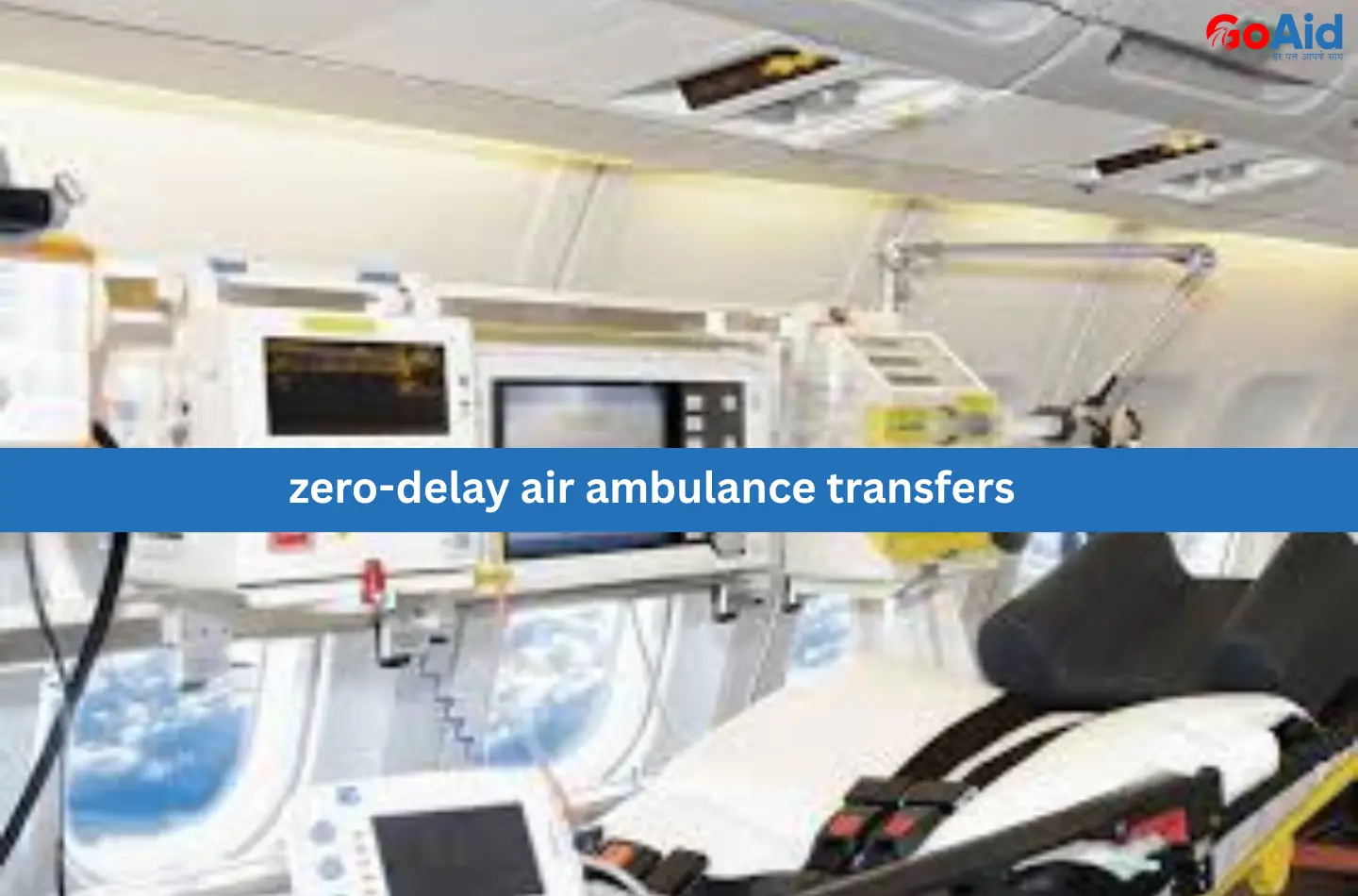
zero-delay air ambulance transfers
Transfers of critically ill patients can be extremely time-sensitive, and many people are unaware of how air ambulances manage to move patients from hospital beds to aircraft without any delay. Understanding this process is important because it ensures life-saving care reaches the patient on time. Knowing how GoAid air ambulance handles zero-delay transfers can provide families and caregivers confidence and clarity during emergencies.
This is why, in this blog, we have explained all the details about how patients are stabilized before air transfer, the rapid hospital discharge and documentation process, coordination of ground ambulances with aircraft, preparation of the medical team for time-critical transfers, and uninterrupted handover at the destination hospital. Do you want to know all these information in detail? Then read this blog to the end.
So, let’s start:
How Is the Patient Stabilized Before Air Transfer?
Patient stabilization is the foundation of zero-delay air ambulance transfers. Before takeoff, the GoAid air ambulance service ensures that the patient’s vital signs are stabilized and any immediate medical risks are controlled.
Doctors assess airway, breathing, and circulation, while managing pain, anxiety, and ongoing treatment needs. Oxygen support, IV lines, medications, and monitoring devices are secured to prevent complications during movement.
This stabilization process reduces the risk of deterioration during transfer and allows emergency air ambulance India services to operate safely. By ensuring the patient is clinically stable before boarding, GoAid enables smooth medical evacuation by air, even in time-critical situations involving critically ill patients.
How Does the Rapid Hospital Discharge and Documentation Process Work?
Rapid hospital discharge and documentation are essential for zero-delay air ambulance transfer. GoAid medical transport follows a streamlined process to minimize administrative delays while maintaining full compliance and patient safety.
1. Quick Medical Discharge Approval
Treating doctors coordinate with the GoAid air ambulance service to provide immediate discharge approval. This ensures the patient is released without unnecessary waiting. This supports emergency air ambulance India timelines.
2. Prioritized Medical Record Compilation
Medical reports, diagnostic results, and treatment summaries are compiled on priority. This step ensures accurate information transfer during medical evacuation by air.
3. Consent and Authorization Handling
Patient or family consent forms are completed promptly. GoAid teams assist families to avoid delays caused by incomplete documentation.
4. Insurance and Payment Coordination
Where applicable, insurance details and payment confirmations are fast-tracked to support zero-delay air ambulance transfer.
5. Digital Sharing of Medical Files
Documents are shared digitally with the GoAid medical transport team and receiving hospital to save time.
6. Clearance for Patient Movement
Hospital staff are informed in advance to prepare the patient for immediate transfer to the ground ambulance.
7. Final Documentation Verification
Before departure, all documents are cross-checked to ensure regulatory compliance and smooth handover.
How Is Ground Ambulance Coordinated with the Aircraft?
Ground ambulance coordination plays a vital role in ensuring zero-delay air ambulance transfer. GoAid air ambulance service synchronizes ground and air operations to eliminate waiting time between hospital departure and aircraft boarding.
The coordination team schedules ground ambulance arrival based on aircraft readiness and airport clearance. Real-time communication is maintained between hospital staff, ground ambulance drivers, airport authorities, and the GoAid medical team.
Patient loading routes, ambulance parking permissions, and tarmac access are pre-arranged to avoid last-minute obstacles. Medical equipment is secured for safe transit, and patient monitoring continues uninterrupted.
This precise coordination ensures critical patient air transfer remains uninterrupted, efficient, and aligned with emergency air ambulance India standards. This reduces total transfer time significantly.
How Is the Medical Team Prepared for Time-Critical Transfers?
Time-critical transfers require high-level readiness from the medical team. GoAid air ambulance service ensures doctors and paramedics are fully prepared to handle emergencies without delay.
1. Pre-Transfer Medical Briefing
The GoAid medical transport team reviews patient condition, diagnosis, and risks to plan care during medical evacuation by air.
2. Role Assignment and Coordination
Each team member is assigned specific responsibilities to avoid confusion during zero-delay air ambulance transfer.
3. Equipment Familiarity and Checks
Doctors and paramedics confirm readiness of ventilators, monitors, and oxygen systems based on patient needs.
4. Emergency Medication Preparation
All required medications are pre-drawn and labeled for quick access during emergency air ambulance India flights.
5. Scenario-Based Emergency Planning
Potential complications are anticipated, and response protocols are planned in advance.
6. Continuous Communication Readiness
The team stays connected with ground coordinators and destination hospitals throughout the transfer.
7. Mental and Physical Readiness
Medical staff prepare for high-pressure conditions to ensure calm, focused care delivery.
How Is a Uninterrupted Handover Ensured at the Destination Hospital?
A uninterrupted handover ensures continuity of care after landing. GoAid air ambulance service follows a structured approach to avoid treatment gaps.
1. Advance Hospital Notification
The receiving hospital is informed early about patient condition and arrival time.
2. Medical Summary Preparation
Doctors prepare a concise clinical summary covering treatment during medical evacuation by air.
3. Direct Doctor-to-Doctor Communication
GoAid doctors brief receiving specialists to ensure smooth transition of care.
4. Coordinated Ground Ambulance Transfer
Ground ambulances are pre-arranged to move the patient immediately after landing.
5. Final Patient Status Confirmation
Vital signs and stability are confirmed before completing the handover.
Conclusion
In conclusion, we have provided all the details about how GoAid air ambulance manages zero-delay transfers from bed to aircraft. From patient stabilization and rapid hospital discharge to precise ground coordination, medical team readiness, and uninterrupted hospital handover, every step is carefully planned.
These processes ensure emergency air ambulance India services operate efficiently, safely, and without unnecessary delays. By focusing on coordination, preparation, and medical precision, GoAid air ambulance service delivers reliable medical evacuation by air for critically ill patients when every minute truly matters.
FAQs:
Q1: What is a zero-delay air ambulance transfer?
A: A zero-delay air ambulance transfer refers to a highly coordinated medical evacuation process where patient movement from hospital bed to aircraft is planned in advance to avoid waiting time. It ensures faster response, minimal administrative delays, and uninterrupted medical care during transfer.
Q2: How does GoAid air ambulance reduce transfer time?
A: GoAid air ambulance reduces transfer time through rapid patient stabilization, quick hospital discharge processes, real-time coordination with ground ambulances, and advance aircraft readiness. This integrated approach supports emergency air ambulance India services and enables timely medical evacuation by air.
Q3: Who coordinates bed-to-aircraft transfers in GoAid?
A: Bed-to-aircraft transfers are coordinated by GoAid’s dedicated ground coordination team. They work closely with hospital staff, ground ambulance providers, airport authorities, and the GoAid medical transport team to ensure smooth, zero-delay air ambulance transfers.
Q4: What role does ground ambulance play in air transfer?
A: Ground ambulances ensure safe and timely patient movement between hospitals and airports. They maintain continuous medical monitoring and act as a critical link between hospital care and air ambulance services during emergency medical evacuation.
Q5: Is zero-delay air ambulance available across India?
A: Yes, GoAid provides zero-delay air ambulance services across major cities and regions in India. With nationwide coordination and experienced medical teams, GoAid supports rapid, reliable air medical transport for critical patients throughout the country.