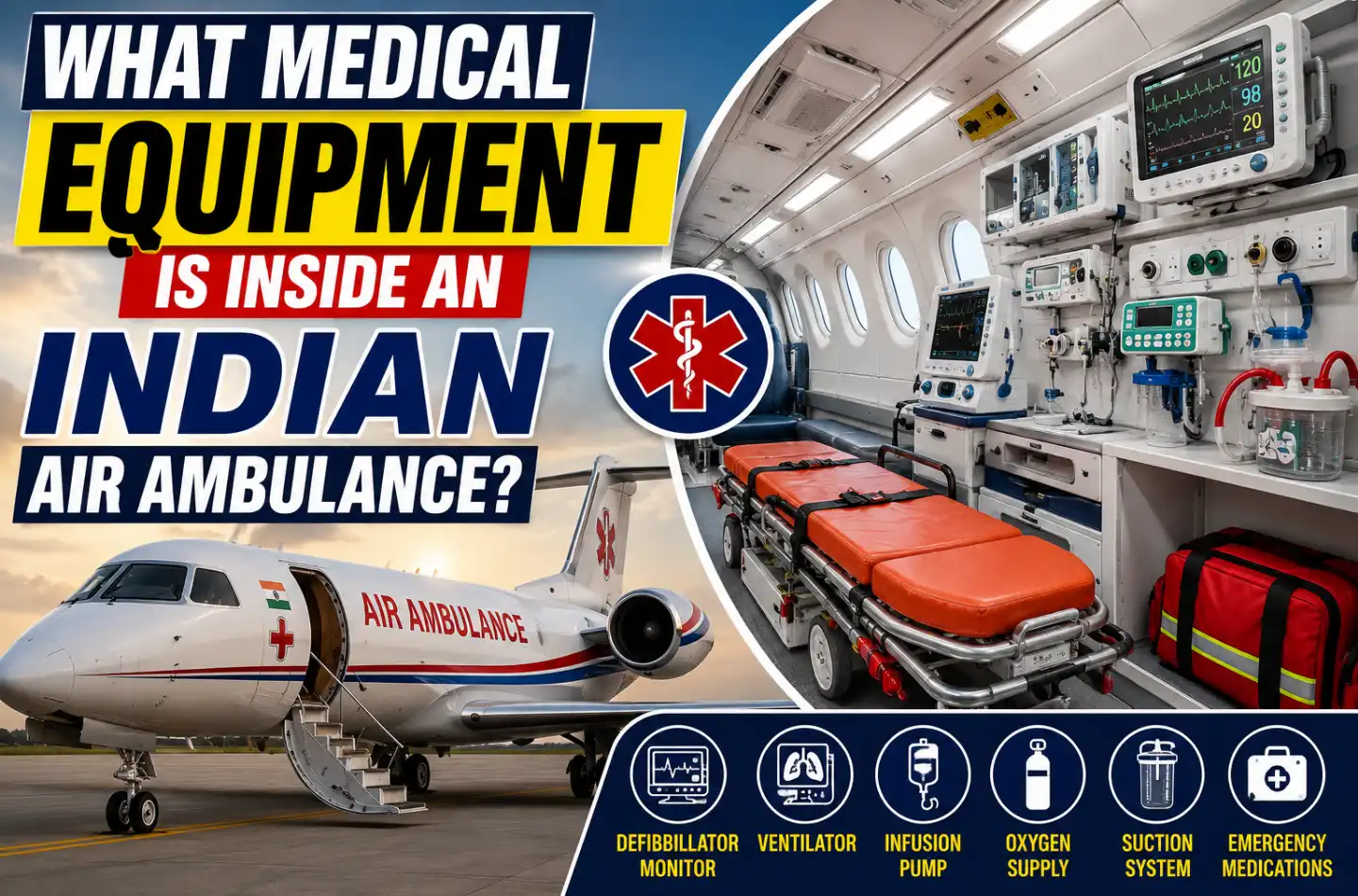
What Medical Equipment Is Inside an Indian Air Ambulance?
An air ambulance is not just like any other airplane; it is a fully equipped, DGCA-approved flying ICU. Every aircraft that is an air ambulance will have equipment that you find in a hospital intensive care unit, just a compact version of all. We are here to tell you what all equipment is placed, drugs, crew composition, and all in an Indian air ambulance.
What makes an air ambulance a flying ICU?
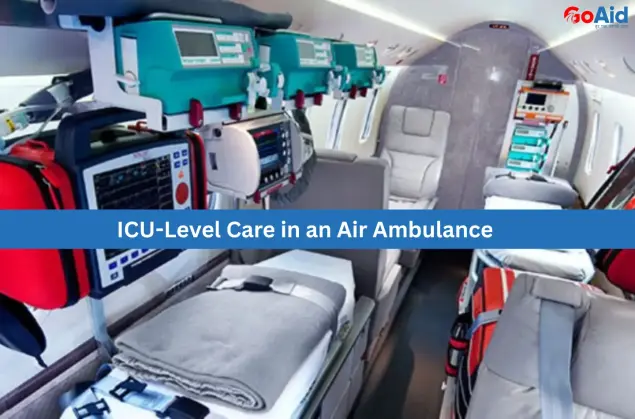
As the name air ambulance suggests, it is an ambulance that is driven in the air with all the facilities of an ICU. This is not a one-time change; it follows DGCA Civil Aviation Requirement (CAR) Section 9 standards and uses aviation-certified medical base units like LifePort or Spectrum Aeromed. The tools, like the stretcher, oxygen cylinders, ventilator, and monitor, are attached to the base units and power supply so that the devices work even during turbulence, take-offs, or landings.
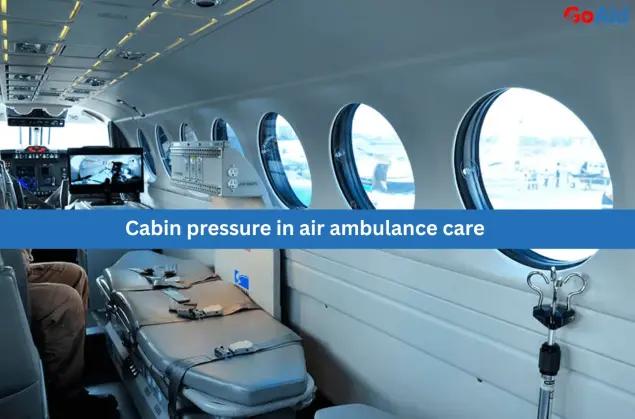
How aircraft cabins are converted into ICU environments
The first thing to be done for converting a normal plane to an air ambulance will be removing the passenger seats and bolting in an FAA/DGCA-approved medical base. Then onto the base, a stretcher with a LifePort or Spectrum frame is attached, with rails on both sides for a ventilator, multi-parameter monitor, infusion pumps, and oxygen regulator to be set up. The walls are modified to install oxygen lines and 28V DC power outlets. Then the cabin is tested and certified before getting into use.
Also Read: Top 10 Myths and Facts About Air Ambulance Services
LifePort / Spectrum Aeromed ICU base unit
The two most used ICU-based unit platforms in Indian air ambulances are LifePort PLUS and Spectrum Aeromed. They have a single-bolt module that has integrated oxygen storage (over 3000 liters), suction, inverter power, equipment rails, and a crash-rated stretcher. With these measures, only a King Air B200 or Pilatus PC-12 is allowed to be converted into a flight used for medication without any safety issues.
Complete Equipment List: Category-wise
Below we have given a complete list of equipment used in an Indian air ambulance, grouped into categories. All the items listed are standard in an ICU-configured air ambulance and are required for DGCA-approved medical operations.
-
Life Support
- Ventilator: The ventilators used are either Hamilton-T1 or Drager Oxylog 3000+ or any other equivalent; these must support invasive and non-invasive modes to work on the DC power of an air ambulance in India.
- Oxygen Supply: A medical oxygen supply should have primary and backup regulators to be the grade quality of aviation. The flight time and an extra hour are used for calculating the flow rate and reserves.
- Suction Machine: It is mandatory to have a suction machine with a portable battery on every ICU air ambulance in India.
2.Cardiac Monitoring
- ECG Machine: Continuous 12-lead ECG, NIBP, SpO₂, EtCO₂, temperature, and invasive pressure monitoring - typically a Philips MX series or Zoll Propaq M is used.
- Defibrillator (AED + manual): The defibrillator used in an Indian air ambulance must function in any altitude and vibration. Commonly used ones are Zoll X-Series or Corpuls 3 with manual defibrillation, pacing, and cardioversion capability.
- Pulse Oximeter: A pulse oximeter is needed as a backup for monitoring integrated SpO₂.
Also Read : Top 10 Air Ambulance Service Providers in India
3. Airway Management
- Laryngoscope: A video laryngoscope, basically a Glidescope/McGrath AMC plus a full Macintosh blade set, is available.
- Intubation Kit: LMAs (sizes 3–5), bougie, surgical cricothyroidotomy kit, and end-tidal CO₂ detector are present in every ICU air ambulance.
- Nebulizer: A nebulizer and BVM are essential parts of an air ambulance with a PEEP valve and reservoir.
4.Medication Delivery
- Syringe Pump: The syringes available in a flying ICU are a minimum of 4 channels for sedation, vasopressors, paralysis, and maintenance fluids.
- Infusion Pump: Medical tools like IV pressure infusers, blood warmers, crystalloids, and colloid fluids are pre-stocked anytime in an air ambulance.
- IV Drips: These are something that is required even in the most basic healthcare; it's a mandate in an ICU setup.
5. Patient Mobility
- LifePort / Spectrum ICU stretcher with Trendelenburg and reverse-Trendelenburg positioning.
- Bariatric straps, head immobiliser, spinal board, and scoop stretcher for bed-to-bed air transfer.
- Aircraft-specific loading system: ramp or rail loader, sized for King Air, Pilatus or helicopter doors
Also Read : Air Ambulance Cost in India - Factors That Affect Pricing
Setup Levels: Basic vs Semi-ICU vs Full ICU air ambulance
Not every patient needs the whole ICU setup; it all depends on their medical condition. Indian air ambulance providers offer 3 setups based on the patient’s clinical needs. This is the single most important factor that determines the equipment list and the price of your air ambulance.
|
|
|
|
|
|
|
|
|
|
|
|
|
|
|
|
|
|
|
|
|
|
|
|
|
|
|
|
|
|
|
|
|
|
|
|
|
|
|
|
|
|
|
|
|
Basic Setup – for stable patients
This setup is appropriate for patients who are stable, conscious, and need quick transport but not ICU-level care. This is best for post-discharge transfers, orthopedic cases, or stable medical patients moving between cities for follow-up.
Semi-ICU – for monitored transfers
Standard configuration for cardiac post-PCI patients, stable post-operative cases, and patients on low-dose support drugs. A cardiac monitor, defibrillator, and limited ventilation capability are always on board.
Full ICU – for critical and ventilator-dependent patients
This is the flying ICU in the strict sense - transport ventilator, full DGCA drug kit, ICU specialist doctor, multi-channel infusion, and invasive monitoring. In India, every ventilator-dependent or unstable patient has to be transferred with a full ICU air ambulance.
Also Read : Air Ambulances Help Critical Patients Reach Hospitals Faster
Specialised Setups
Apart from the three standard setup levels, Indian air ambulance service providers also provide three specialized configurations. It’s an important question to ask before you book, as very few competitors in the Indian market have full capability for all three.
ECMO transfer: what equipment is needed in-flight
Beyond the standard ICU kit, the ECMO (Extracorporeal Membrane Oxygenation) transfer involves the setup of the complete ECMO circuit: console, pump, oxygenator, heat exchanger, and backup hand-crank. Aircraft DC power is the power source for the circuit with a minimum of 90 minutes of battery backup. ECMO air ambulance India operations are rare and require a dedicated perfusionist along with the ICU doctor and flight nurse on board.
Neonatal ICU setup: Draeger incubator + Stephan respirator
Neonatal air ambulance equipment in India comprises a Draeger or Atom transport incubator with integrated humidification, phototherapy, and SpO₂ monitoring, and a neonatal respirator like the Stephan F120 or Fabian. You need to have a neonatologist on board. This set-up is non-interchangeable; a sick newborn cannot be safely transported by a standard adult ICU air ambulance.
Isolation pod for infectious patients
For airborne infectious patients, such as those with COVID-19, H1N1, TB, or the like, an EpiShuttle or similar negative-pressure isolation pod is placed over the stretcher. The pod has its own HEPA filtration and provides ventilation and IV access through sealed glove ports – protecting the medical crew and the aircraft.
Mandatory drug kit - DGCA & MoHFW norms
A drug kit in an Indian air ambulance is not improvised; it adheres to the Ministry of Health & Family Welfare (MoHFW) emergency medical service guidelines and DGCA CAR Section 9 cold-chain and storage rules. Each drug is sealed, dated, temperature-logged & audited before each flight.
Airway management drugs
The standard drugs used for airway and sedation in Air Ambulance India operations are propofol, ketamine, midazolam, fentanyl, succinylcholine, and rocuronium. They permit rapid sequence intubation, long-term sedation of ventilated patients, and analgesia in flight.
Cardiovascular agents
The cardiovascular core of the kit contains adrenaline, noradrenaline, dopamine, dobutamine, amiodarone, atropine, adenosine, nitroglycerin, and labetalol. These are essential drugs in Indian air ambulance ICU setups for the management of arrhythmias, shock, and hypertensive emergencies in flight.
DGCA-approved cold-chain drug storage rules
DGCA-approved air ambulance equipment in India includes a cold-chain drug box with temperature monitoring for drugs like insulin, blood products, and some antibiotics. The log is part of the post-flight audit, and continuous temperature logging is required.
Authority signal reference: DGCA Civil Aviation Requirement (CAR) Section 9 - Series ‘C’ Part I and MoHFW EMS Standard Drug List. The below two documents are the legal requirements for drugs and equipment to be carried on every air ambulance in India.
Also Read: Air Ambulance vs Commercial Flights
Fixed-wing vs helicopter ambulance – equipment differences
Helicopter ambulance or fixed-wing ambulance India equipment is one of the most searched comparisons, and the answer is more about cabin space and range than about the medical kit itself.
King Air B200 / Pilatus PC-12 – fixed-wing configuration
King Air B200 & Pilatus PC-12 air ambulance India configurations – full ICU equipment list, including ventilator, monitor, defibrillator, 4-channel pumps, full drug kit, plus room for two medical crew and one accompanying family member. The range is 1,500–3,000 km, and these are the workhorses of long-distance medevac in India.
Helicopter ambulance - limited space
In India, helicopter ambulances are usually Airbus H145 or Bell 412. If cabin space is compressed, equipment is compressed, with a ventilator, monitor, and one infusion pump on one single rail. In India, helicopter ambulances are used for short-distance flights (under 250 km), evacuation from accident sites, and transferring patients between hospitals within a city.
When each type is used in India
Helicopter: Distances ~250 km, accident spots, hill stations, hospitals with helipads.
Fixed-wing turboprop: 250-2,000 km - standard for interstate medevac.
Fixed-wing jet: 2,000 km and above - International repatriation and inter-India transfers.
Medical crew inside an Indian air ambulance
A machine is only as good as the crew that runs it. In India, a full ICU air ambulance has two medical staff - usually a critical care doctor and a flight nurse or paramedic - in addition to the two pilots.
Critical care doctor / intensive care specialist
In an Indian air ambulance, the doctor is an MD/DNB in critical care, anesthesia, or emergency medicine, preferably with a Fellowship in Aeromedical Sciences (FAM). These guide all in-flight clinical decisions, including ventilator settings and drug titration and emergency interventions.
Flight nurse/paramedic
The flight nurse is trained in advanced cardiac life support (ACLS), advanced trauma life support (ATLS), and flight physiology. They handle equipment, IV access, monitoring, and documentation throughout the flight.
Fellowship in Aeromedical Sciences (FAM)
FAM-certified doctors have been trained in a structured program in the physiology of altitude, aviation pharmacology, and in-flight emergency management. One of the best quality signals you can verify when booking an air ambulance is whether the ICU doctor on flight has FAM certification.
In air ambulance India, can a patient travel with family? Yes - most air ambulances in India can take one family member in the cabin (subject to weight balance and patient condition). Helicopter ambulances usually can’t.
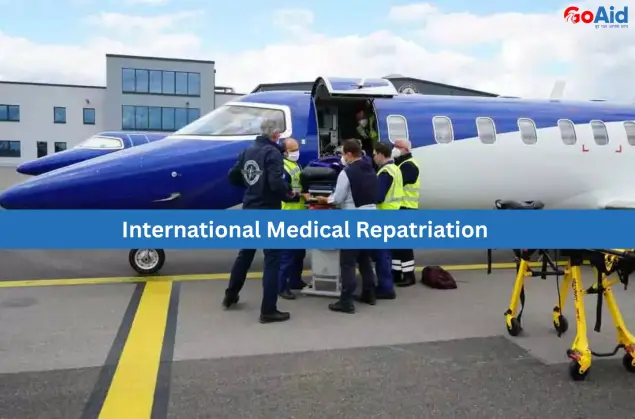
Also Read: International Medical Repatriation
How equipment affects air ambulance cost in India
The total flight price includes the cost of air ambulance equipment in India, but the amount of equipment is the biggest variable. A basic setup and a full flying ICU on the same aircraft and route can be ₹1.5-2 lakh apart per trip.
ICU equipment cost range – Add on ₹20,000 to ₹200,000
A basic to semi-ICU cabin will usually cost between ₹20,000 - ₹60,000 more for a flight. Going from semi-ICU to full ICU - with transport ventilator, ICU specialist doctor and multi-channel pumps - adds another Rs 80,000-Rs 2 lakh depending on flight duration and aircraft type
Ventilator-dependent patient cost premium
A patient flight in India is always going to be in the full ICU configuration as they are ventilator dependent. Ventilator + ICU doctor + extended oxygen reserves should add approximately 25-40% over the base aircraft charter rate.
Full air ambulance cost breakdown, 2026
Domestic short (less than 500 km) ₹3.5–6 lakh (full ICU)
Domestic Long (500-1,500 km) Rs 6-14 lakh (Full ICU)
Pan-India/jet ₹14-25 lakh+ (full ICU + ECMO ₹5-8 lakh extra)
Helicopter (up to 250 km) ₹ 1.8–4.5 lakh
DGCA regulations & equipment standards in India
All genuine air ambulances in India operate under DGCA Civil Aviation Requirement (CAR) Section 9 – Series ‘C’ Part I, which governs medical equipment, crew qualification, helipad standards, and aircraft certification. This is the most important regulatory document for air ambulance operations in India.
DGCA CAR Section 9 - equipment requirements
CAR Section 9 describes what types of medical equipment you will need on board, how it must be secured, how much power redundancy you will need, and minimum oxygen reserves. And it also covers helipad certification standards applicable to hospital rooftop helipads around the country.
Calibration certificate requirement for all ICU equipment
All the ICU equipment, such as ventilators, monitors, defibrillators, and infusion pumps, used in an Indian air ambulance must have a valid calibration certificate from an NABL-accredited lab. Calibration is generally done once a year, and the certificates form part of the medical airworthiness file of the aircraft.
Also Read : ICU-Level Care in an Air Ambulance
How to verify an air ambulance provider is DGCA-approved
1. Ask for the operator’s DGCA Air Operator’s Permit (AOP) - verify the medical evacuation endorsement.
2. Request a copy of the latest CAR Section 9 compliance audit.
3. Confirm equipment calibration certificates are current (within 12 months).
4. Confirm the ICU doctor’s ACLS/ATLS and ideally FAM certification.
5. Cross-check the registration number on the DGCA public aircraft register.
FAQ - Frequently asked questions
Q. What equipment does an Indian air ambulance carry?
A. An Indian air ambulance carries ICU-grade equipment: transport ventilator, multi-parameter cardiac monitor, defibrillator, oxygen cylinders, 4-channel infusion pumps, suction machine, intubation kit, and a DGCA-approved drug kit. The exact equipment list depends on whether the setup is basic, semi-ICU, or full ICU (flying ICU).
Q. Is there always a ventilator on an air ambulance?
A. No - a ventilator in an Indian air ambulance is only mandatory on a full ICU setup. Basic and semi-ICU configurations may carry an Ambu bag and oxygen instead. If the patient is ventilator-dependent, you must specifically book a full ICU air ambulance with a transport ventilator on board.
Q. Can an air ambulance carry a patient on ECMO?
A. Yes - ECMO air ambulance India operations are available but rare. The aircraft must be loaded with the full ECMO circuit, console, and backup power. A trained perfusionist must travel in addition to the ICU doctor and flight nurse. ECMO transfers add roughly ₹5–8 lakh to the standard ICU air ambulance cost.
Q. What is the difference between a BLS and ICU air ambulance?
A. A BLS (Basic Life Support) air ambulance carries oxygen, basic monitoring, and a paramedic, suitable for stable patients. An ICU air ambulance carries a transport ventilator, full cardiac monitoring, defibrillator, infusion pumps, and an ICU specialist doctor - designed for critical, unstable, or ventilator-dependent patients in India.
Q. What drugs are mandatory in an Indian air ambulance?
A. Mandatory drugs in Indian air ambulance ICU kits include adrenaline, noradrenaline, atropine, amiodarone, propofol, ketamine, midazolam, fentanyl, succinylcholine, dopamine, nitroglycerin, and IV fluids. The full list follows MoHFW EMS guidelines and DGCA CAR Section 9 cold-chain storage rules and is audited before every flight.
Q. Are air ambulance equipment DGCA approved?
A. Yes - every piece of medical equipment in a legitimate Indian air ambulance must be DGCA-approved under CAR Section 9 and carry a valid NABL calibration certificate (typically renewed every 12 months). The aircraft itself must hold an Air Operator’s Permit with a medical evacuation endorsement.
Q. How many doctors travel in an air ambulance in India?
A. A fully equipped Indian air ambulance for an ICU has a minimum of one critical care doctor (MD/DNB in critical care, anesthesia, or emergency medicine) and one flight nurse or paramedic. For ECMO or neonatal transfers, a third member of the medical crew-the perfusionist or the neonatologist, joins the crew.
Q. Can family members travel with the patient?
A. Yes – most fixed-wing air ambulances in India will allow one family member in the cabin depending on aircraft weight, balance, and patient condition. Helicopter ambulances usually cannot take a family member due to space and weight constraints. Always check at the time of booking.
Q. Does ICU equipment make air ambulances more expensive?
A. Yes, the ICU equipment in air ambulance India operations adds Rs 20,000 to Rs 2 lakh per flight depending on the setup. The most expensive tier is the full ICU with a ventilator, ICU doctor, and multichannel pumps. The cost of a standard ICU air ambulance is between ₹15-20 lakh, and the cost of the ECMO setup is an additional ₹5-8 lakh.
Q. Is neonatal ICU care available in Indian air ambulances?
A. Yes - neonatal air ambulance equipment in India is a Draeger or Atom transport incubator, a neonatal respirator (Stephan F120 or Fabian), and a neonatologist on board. A standard adult ICU air ambulance cannot safely transport a sick newborn - you must specifically book a neonatal-configured aircraft.