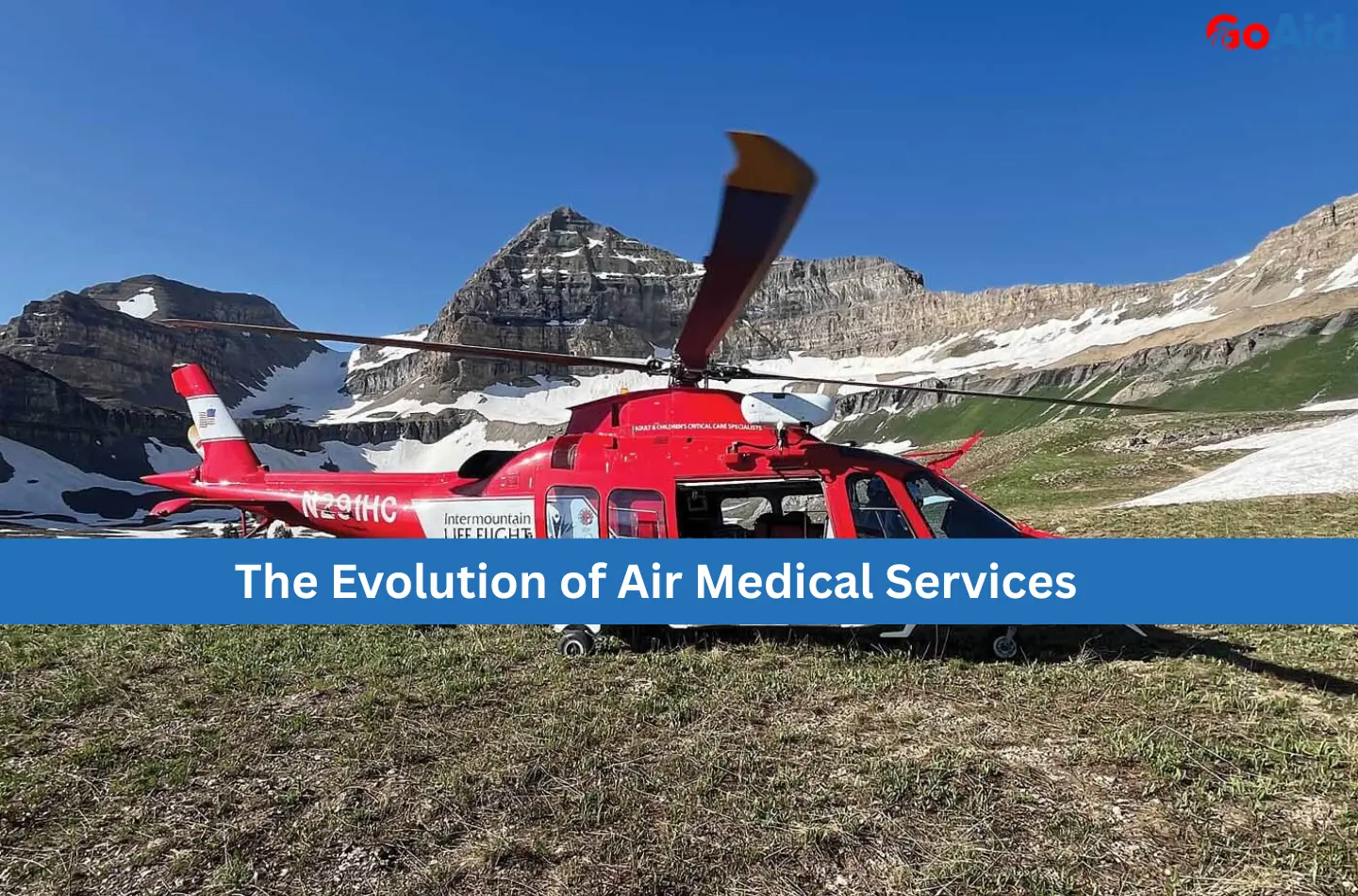
The Evolution of Air Medical Services
Emergency medical care has evolved significantly over the years, especially when rapid patient transportation became essential for saving lives. The development of air medical services transformed emergency healthcare by enabling faster access to advanced treatment across long distances.
This is why, in this blog, we have added all the details and key information related to the Evolution of Air Medical Services. This includes the early history of air ambulances, the role of wars and emergencies, technological advancements, evolution of medical equipment, growth of trained aviation medical teams, modern air ambulance capabilities, and the contribution of GoAid Ambulance Service.
Are you excited to know all these details? Then don’t just wait! Read our blog till the end to explore the journey of air medical services.
So, let’s start–
Early History of Air Medical Services
The evolution of air medical services began in the early 20th century, driven by the need to provide rapid medical aid in remote or inaccessible areas. Initially, small aircraft were used to transport critically ill or injured patients, often by volunteers or military personnel.
Over time, advancements in aviation and medical technology transformed these services into organized air ambulance operations. The focus shifted from mere transport to comprehensive patient care during flights.
Today, companies like GoAid Ambulance Service have built on this foundation, combining modern air ambulance technology with experienced paramedics to ensure safe, efficient, and lifesaving emergency care.
Role of War and Emergencies in Air Ambulance Development
Wars and natural emergencies accelerated air ambulance development, highlighting the need for rapid patient evacuation and medical intervention.
1. Military Innovations
Military conflicts played a critical role in shaping the evolution of air medical services, introducing organized air evacuation methods and innovative strategies that directly influenced modern air rescue services and civilian air ambulance operations.
2. Rapid Patient Transport
Wars and emergencies highlighted the urgent need for rapid patient transport from battlefields and disaster zones, driving the growth of air medical care and establishing the principle of timely, lifesaving medical intervention.
3. Specialized Medical Equipment
Experiences during conflicts led to the development of specialized onboard medical equipment. This includes ventilators, monitoring devices, and portable surgical tools, forming the foundation of modern air ambulance technology.
4. Skilled Medical Teams
The demands of emergency evacuations during wars emphasized the importance of highly trained paramedics and medical teams, which became an essential part of professional air rescue services and medical aviation development.
5. Civilian Adaptation
Techniques and strategies from military air evacuation were adapted for civilian use. This enables services like GoAid Ambulance Service to expand air rescue services and provide efficient emergency healthcare transport across India.
6. International Air Rescue Protocols
Wartime experiences encouraged the standardization of air rescue protocols internationally. This ensures safer, regulated operations and contributing to the structured growth of modern air medical care systems.
7. Emergency Preparedness Awareness
Large-scale emergencies and natural disasters raised public and governmental awareness about the benefits of air ambulance services, driving investment in air medical services and the evolution of air ambulance infrastructure globally.
Technological Advancements in Air Medical Services
Innovations in modern air ambulance technology have revolutionized the evolution of air medical services. This improves patient care, safety, and efficiency in emergency transport.
Key Technological Advancements in Air Medical Services:
1. Advanced Life Support Systems
Modern air ambulances are equipped with advanced life support systems. This includes ventilators, defibrillators, and monitoring equipment. This enhances patient care during transit and strengthening the evolution of air medical services.
2. GPS and Navigation Technology
State-of-the-art GPS and navigation systems allow precise routing, faster response times, and optimized emergency transport, critical for the growth of medical aviation development and air rescue services.
3. Telemedicine Integration
Air ambulances now feature telemedicine systems. This enables real-time communication between onboard paramedics and hospital specialists, which improves decision-making and patient outcomes during air medical transport.
4. Modern Aircraft Design
Innovative aircraft designs improve safety, stability, and onboard medical accessibility, supporting the evolution of air ambulance services and enabling the safe transfer of critical patients.
5. Portable Diagnostic Tools
Compact and portable diagnostic equipment allows paramedics to perform essential tests mid-flight, advancing modern air ambulance technology and enhancing emergency medical care.
6. Enhanced Communication Systems
Secure and reliable communication systems facilitate coordination with hospitals, emergency teams, and GoAid Ambulance Service operations, vital for uninterrupted air medical services.
7. Patient Comfort and Safety Features
Technological enhancements such as vibration reduction, climate control, and ergonomic stretchers ensure patient safety and comfort, reflecting the evolution of air medical services globally.
Evolution of Medical Equipment in Air Ambulances
Over the decades, medical equipment in air ambulances has evolved from basic stretchers and oxygen tanks to sophisticated onboard technologies designed for critical care. Early air rescue missions relied on simple patient transport, but modern air ambulance technology now integrates advanced life support systems, portable ventilators, defibrillators, infusion pumps, and monitoring devices.
Telemedicine tools allow paramedics to consult with hospital specialists in real time. This ensures timely interventions. Companies like GoAid Ambulance Service have incorporated these innovations into their fleet. This enables safe, efficient, and high-quality emergency medical transport across India.
This evolution has transformed air ambulance operations into mobile intensive care units, significantly improving patient survival rates during emergency transport.
Growth of Trained Medical Aviation Teams
The growth of trained medical aviation teams has been crucial to the evolution of air medical services. Initially, air ambulance operations relied on volunteers or basic medical staff, but the increasing complexity of in-flight patient care necessitated specialized paramedics, flight nurses, and doctors trained in emergency medicine.
Today, organizations like GoAid Ambulance Service employ teams skilled in advanced life support, critical care, and rapid emergency response. This ensures patients receive expert medical attention during transport.
Continuous training in modern air ambulance technology, handling of medical equipment, and emergency protocols has elevated the standards of medical aviation development. This makes air rescue services safer, faster, and more reliable across India.
Modern Air Ambulance Services and Capabilities
Modern air ambulance services combine advanced aircraft, cutting-edge medical technology, and expert teams to provide comprehensive emergency care and rapid patient transport nationwide.
Key Capabilities of Modern Air Ambulance Services:
1. Diverse Fleet for Various Emergencies
Modern air ambulance services feature a diverse fleet. This includes BLS, ALS, ICU ventilator, hospital, and event ambulances. This ensures comprehensive care and rapid response during critical emergencies.
2. Rapid Response and Accessibility
Advanced air rescue services enable response times of just 10–20 minutes in urban and remote areas, demonstrating the growth of medical aviation development and the evolution of air medical services.
3. Specialized Onboard Medical Equipment
Modern air ambulances are equipped with state-of-the-art medical devices. This includes ventilators, monitors, defibrillators, and infusion pumps, reflecting continuous advancements in air ambulance technology and patient care.
4. Skilled Medical Teams
Highly trained paramedics, flight nurses, and doctors form specialized medical aviation teams. This provides expert in-flight care and supporting the growth of air medical care standards globally.
5. Telemedicine and Communication Systems
Integrated telemedicine and secure communication systems allow real-time consultations with hospital specialists. This improves emergency decision-making and enhancing the evolution of air ambulance services.
6. Interstate and National Coverage
Modern air ambulance services. This includes providers like GoAid Ambulance Service, offer nationwide and interstate coverage. This ensures rapid medical evacuation and expanding the reach of air rescue services.
7. Patient Safety and Comfort Features
Ergonomic stretchers, climate control, vibration reduction, and secure seating enhance patient safety and comfort, highlighting the integration of modern technology into advanced air ambulance systems.
Contribution of GoAid Ambulance to Modern Air Medical Services
GoAid Ambulance Service has significantly enhanced modern air medical services by combining advanced air ambulance technology, trained medical teams, and rapid emergency response across India.
Key Contributions of GoAid Ambulance Service:
1. Rapid 10-Minute Response
GoAid Ambulance ensures emergency air ambulance services reach patients within 10 minutes of booking, exemplifying its commitment to fast, efficient medical aviation development across India.
2. Advanced Fleet of Ambulances
With BLS, ALS, ICU ventilator, hospital, surgery, and event ambulances, GoAid Ambulance Service offers a diverse fleet, supporting modern air ambulance technology and specialized patient care.
3. Experienced Medical Teams
Highly skilled paramedics, doctors, and flight nurses provide expert care during air transport, highlighting GoAid’s contribution to the growth of medical aviation teams.
4. Nationwide and Interstate Coverage
GoAid offers air ambulance services across major cities and interstate locations. This ensures accessible and reliable air rescue services for critical emergencies.
5. Modern Medical Equipment
State-of-the-art life support systems, monitoring devices, and telemedicine facilities onboard GoAid air ambulances enhance emergency care and the evolution of air medical services.
6. Affordable and Government-Approved Services
GoAid Ambulance combines high-quality air medical services with affordable, government-approved rates. This makes modern air ambulance care accessible to more patients.
7. Commitment to Innovation and Safety
GoAid continually upgrades its technology, training, and protocols, contributing to the advancement of modern air medical services while prioritizing patient safety and comfort.
Conclusion
In conclusion, we have provided all details about the evolution of air medical services, highlighting key historical milestones, technological advancements, and the crucial role of trained medical teams. GoAid Ambulance Service has played a pivotal role in modernizing air ambulance operations in India through rapid response, advanced equipment, skilled paramedics, and nationwide coverage.
By integrating modern air ambulance technology with patient-centered care, GoAid ensures safe, efficient, and reliable emergency medical transport. Their commitment to innovation, affordability, and excellence demonstrates the ongoing growth and importance of air rescue services in delivering lifesaving care across India.
FAQs
Q1: What is the role of GoAid Ambulance Service in air medical services?
A: GoAid Ambulance Service plays a vital role in modern air medical services. This provides rapid response, advanced life support ambulances, trained paramedics, and nationwide coverage. For emergency air ambulance services, you can contact GoAid at 8008280020.
Q2: How quickly can GoAid Air Ambulance reach a patient?
A: GoAid Ambulance ensures a 10-minute response time from the moment of booking. Their prompt service is supported by an experienced team and advanced aircraft. Book your air ambulance anytime via the app or call 8008280020.
Q3: What types of air ambulances does GoAid provide?
A: GoAid Ambulance Service offers a diverse fleet including BLS, ALS, ICU ventilator, hospital, surgery, and event ambulances, catering to all emergency medical needs across India.
Q4: Are GoAid Air Ambulance services available nationwide?
A: Yes, GoAid Ambulance Service provides interstate and nationwide air ambulance coverage. This ensures rapid and reliable emergency medical transport to major cities and remote locations in India.
Q5: Who staffs the GoAid Air Ambulances?
A: GoAid Air Ambulances are staffed with trained paramedics, flight nurses, and doctors experienced in critical care. This ensures professional medical attention throughout the patient’s transport.
Q6: What equipment is available onboard GoAid Air Ambulances?
A: GoAid Air Ambulances are equipped with advanced life support systems, ventilators, monitors, infusion pumps, and telemedicine facilities to deliver high-quality in-flight emergency care.
Q7: How can I book a GoAid Air Ambulance in an emergency?
A: You can book GoAid Air Ambulance services instantly via the GoAid mobile app or by calling their 24/7 helpline at 8008280020 for immediate assistance.