Air Ambulance vs Commercial Flights
Air ambulances and commercial airline medical transfers serve different patient transportation needs in India. Air ambulances are specially equipped aircraft designed for critically ill patients who require continuous monitoring, ICU support, and rapid medical transfer.
They provide a controlled medical environment with experienced doctors, trained paramedics, and advanced life-support systems onboard, ensuring emergency care throughout the journey. Commercial airline medical transfers, on the other hand, operate through regular passenger flights where medical assistance is comparatively limited and are generally suitable for stable patients who do not require intensive monitoring.
Choosing the appropriate option depends on factors such as the patient’s medical condition, urgency, travel distance, and the level of healthcare support required during transit. GoAid Air Ambulance ensures quick, safe, and dependable transfers for emergency situations, while commercial airline medical transfers can be a more economical solution for non-critical patients.
This provides patients and families with flexible, accessible, and reliable transportation options across both domestic and international routes.
When Does an Emergency Air Ambulance Become Necessary?
Emergency air ambulance is essential for critically ill or unstable patients who require immediate medical care, continuous monitoring, and rapid transfer to save lives during intercity or international travel.
- Critical Health Conditions
Patients experiencing cardiac arrest, severe trauma, or organ failure need ICU-level monitoring during transfer, which air ambulances provide to stabilize and save lives en route.
- Time-Sensitive Emergencies
Situations like organ transplants, post-surgery complications, or sudden deterioration require rapid deployment; air ambulances reduce delays and deliver patients promptly to specialized care.
- Remote or Inaccessible Locations
Patients in areas with poor roads, heavy traffic, or geographically difficult regions rely on air ambulances for fast and safe hospital access.
- Continuous Medical Supervision
Air ambulances provide paramedics and ICU equipment onboard for real-time monitoring and emergency interventions that cannot be offered on commercial flights.
- International Emergency Transfers
Critical patients needing specialized overseas treatment depend on air ambulances for controlled, medically equipped flights with all necessary life-support systems.
Read More: Air Ambulance for Organ Transport: Speed That Saves Lives
When Does a Commercial Airline Medical Transfer Become Necessary?
Commercial airline medical transfers are suitable for stable patients who can travel safely with limited medical support, ideal for routine hospital visits, follow-ups, or long-distance non-critical transfers.
- Stable Health Conditions
Patients with stable vitals and mild medical needs can travel without ICU supervision, as they do not require intensive monitoring during the flight.
- Cost-Effective Travel
Non-urgent transfers over long distances are more affordable via commercial airlines compared to specialized air ambulances. This reduces financial burden for families.
- Routine or Scheduled Appointments
Patients traveling for follow-up care, minor procedures, or hospital transfers that are non-emergency can use commercial flights safely and conveniently.
- Accompanied by Medical Staff
A nurse or paramedic can accompany patients to provide basic care. This ensures safety without the need for full ICU support onboard.
- Flexible Scheduling
Commercial flights allow advanced booking and pre-planned travel, giving patients the convenience to coordinate hospital schedules and medical appointments efficiently.
Also Read: Air Ambulance Cost in India - Factors That Affect Pricing
Advantages of Emergency Air Ambulance
Emergency air ambulances offer rapid, safe, and medically equipped transfers for critical patients. This ensures continuous care, ICU support, and quick response to life-threatening situations across domestic and international routes.
- Rapid Response
Air ambulances provide immediate deployment after a call, minimizing transfer delays. This quick response is crucial for critical patients who require urgent medical attention to survive.
- ICU-Level Care Onboard
Equipped with ventilators, monitors, and emergency medications, air ambulances provide full ICU support during flight, maintaining patient stability and allowing medical interventions en route.
- Trained Medical Crew
Experienced paramedics and doctors accompany patients. This provides real-time monitoring, emergency interventions, and ensuring patients remain stable during critical transfers.
- Access to Remote Locations
Air ambulances reach areas with poor road infrastructure or heavy traffic quickly, which would otherwise delay critical treatment for patients.
- Time-Sensitive Transfers
For organ transplants, post-surgery emergencies, or severe trauma, air ambulances drastically reduce travel time, increasing survival chances and improving treatment outcomes.
- International Transfers
Air ambulances are equipped for cross-border transfers, handling documentation, customs, and specialized care for patients traveling abroad.
- Continuous Communication
Real-time updates with sending and receiving hospitals ensure smooth coordination, preparation, and readiness for immediate care upon arrival.
Advantages of Commercial Airline Medical Transfer
Commercial airline medical transfers are suitable for stable patients. This offers cost-effective, long-distance travel with basic medical support and convenience for non-critical hospital transfers or scheduled medical visits.
- Cost-Effective Option
Commercial flights are significantly cheaper than emergency air ambulances. This makes them suitable for non-critical patients who need long-distance travel without intensive medical supervision.
- Wide Accessibility
Scheduled commercial flights operate across numerous domestic and international routes. This ensures easy access to hospitals in different cities and countries.
- Flexibility in Travel Plans
Patients can plan transfers in advance, coordinating with hospital appointments and scheduling flights according to convenience.
- Basic Medical Support Available
A nurse or paramedic can accompany patients. This provides monitoring, medication administration, and assistance with any minor health issues during transit.
- Comfortable Travel Environment
Commercial aircraft offer spacious seating, cabin amenities, and familiar travel experience for patients who do not require ICU-level care.
- Non-Emergency Transfers
Ideal for patients who are stable and can withstand longer flights without critical interventions. This reduces stress and complications during transport.
- Lower Operational Complexity
Transfers via commercial airlines require minimal logistical preparation compared to air ambulances, eliminating the need for specialized aircraft, ICU setups, or rapid deployment protocols.
Limitations of Both Air Ambulance vs Commercial Airline Medical Transfers
Both air ambulances and commercial airline medical transfers have constraints. Air ambulances are expensive, while commercial flights provide limited medical support. Choice depends on patient condition, urgency, and cost.
Limitations of Air Ambulance Medical Transfers
Air ambulance transfers, while rapid and fully equipped, have higher operational costs. This makes them expensive for many families. Weather conditions such as storms or heavy fog can delay flights, affecting timely patient transfer.
Limited landing facilities at some hospitals or remote areas may require additional ground transport, increasing complexity. Air ambulances are not ideal for minor or stable patients, as the intensive resources may be unnecessary.
Long-distance flights require careful planning, route clearance, and coordination with multiple authorities, which can be administratively demanding. Noise, vibration, and confined space may cause discomfort for some patients. Finally, availability may be limited during peak emergencies. This makes booking challenging at times.
Also Read: Top 10 Myths and Facts About Air Ambulance Services
Limitations of Commercial Airline Medical Transfers
Commercial airline transfers are suitable for stable patients but have restricted medical support. They lack ICU equipment, ventilators, and onboard doctors. This makes them unsuitable for critical or unstable patients.
Immediate interventions are limited in emergencies, risking patient safety during sudden deterioration. Transfers depend on commercial flight schedules, causing potential delays if urgent transport is needed.
Airports may not always have seamless access to hospitals, requiring additional ground transfers. Long waiting times for boarding, security checks, and baggage handling can increase patient stress.
International transfers require visa, customs, and flight documentation, adding administrative complexity. Cabin pressure changes may affect sensitive patients, and overall monitoring is limited to basic care.
Advantages of Hiring GoAid Air Ambulance
GoAid Air Ambulance provides fast, safe, and reliable medical transfers. This ensures critical patients receive professional care, ICU support, and timely arrival at hospitals both within India and internationally.
- Rapid Deployment
GoAid offers immediate ambulance dispatch after booking. This ensures minimal delay for critical patients, especially during emergencies where every minute counts.
- 24/7 Availability
Round-the-clock service ensures patient transfers anytime, day or night, without waiting for scheduled flights or hospital availability.
- ICU-Equipped Aircraft
All aircraft are fitted with ventilators, monitors, and emergency equipment to provide ICU-level care during the journey.
- Trained Medical Crew
Paramedics and ICU-trained doctors accompany patients. This offers continuous monitoring and emergency interventions en route.
- Wide Fleet Options
GoAid operates helicopters, jets, and fixed-wing aircraft suitable for domestic or international transfers, catering to all emergency scenarios.
- Fast Organ & Critical Transfers
Supports life-saving organ and emergency patient transfers, maintaining viability and ensuring timely arrival.
- Customized Care
Equipment and staff are tailored according to patient condition, from stable to critical cases.
- Government-Approved Pricing
Transparent and affordable charges with official approval. This ensures quality service without financial surprises.
- Seamless Coordination
Communicates with hospitals for smooth handovers. This reduces delays and improving treatment outcomes.
- Safety Protocols
Strict adherence to handling, sterilization, and monitoring protocols ensures patient safety and optimal care during transport.
Also Read: Why Trust Matters in Air Ambulance Services
About ICU and Life-Support Facilities in Air Ambulances
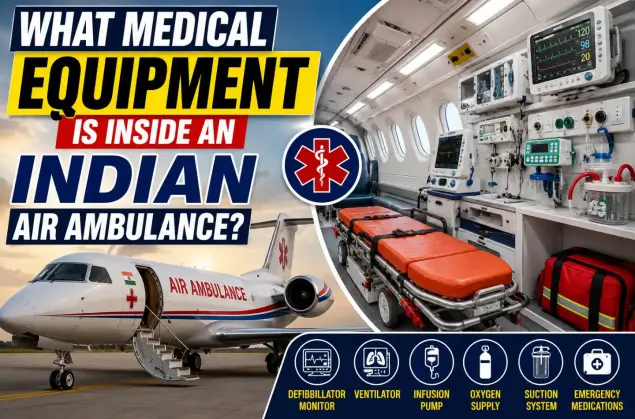
GoAid air ambulances are equipped with advanced ICU facilities for critical patient support. Ventilators, oxygen supply systems, defibrillators, and monitors ensure patients receive continuous life-support during flight.
Cardiac monitors track heart activity, while infusion pumps deliver essential medications. Temperature-controlled systems maintain patient comfort, and portable suction units manage airway needs. Emergency medications are onboard for immediate intervention.
The aircraft environment is optimized to reduce stress and vibration impact. Backup power and oxygen systems provide uninterrupted care. All equipment is regularly maintained and tested.
This combination of ICU-level facilities guarantees patients receive hospital-grade care. This makes GoAid transfers reliable, safe, and efficient for critical medical emergencies.
Trained Paramedics vs Airline Staff
GoAid employs highly trained paramedics and doctors with ICU expertise, capable of handling emergencies, monitoring vitals, and providing life-saving interventions during transport. Airline staff, in contrast, typically have only basic first-aid training and cannot provide continuous medical support.
Paramedics manage ventilators, oxygen delivery, and emergency medications, while monitoring critical parameters such as blood pressure, oxygen saturation, and heart rate. They coordinate with hospitals for seamless handovers.
Airline staff are limited to assisting passengers and cannot respond to sudden health deterioration. Choosing GoAid ensures patients are under constant professional supervision with medical equipment ready for immediate use, significantly increasing survival chances compared to commercial airline travel.
Comfort & Care Comparison Between Air Ambulance & Commercial Airlines
Patient comfort and medical care differ drastically between air ambulances and commercial flights, impacting overall safety, stress levels, and quality of care during emergency or routine transfers.
Comfort & Care of Air Ambulance Medical Transfer
Air ambulances offer reclining stretchers, controlled cabin environment, and quiet flight conditions. ICU monitoring, medical staff attention, and immediate intervention availability reduce patient stress and ensure stability throughout the journey.
Patients are positioned for comfort while medical procedures are performed, if needed, during flight.
Comfort & Care of Commercial Airlines Medical Transfer
Commercial flights provide standard seating and cabin amenities but lack ICU-level care. Comfort is limited to passenger seats, and medical support may only involve an accompanying nurse or basic equipment.
Patients must tolerate delays, limited mobility, and the absence of continuous monitoring during the journey.
Complete Comparison
Air ambulances combine comfort with life-saving care. This offers ICU-level support, paramedic monitoring, and tailored environments for patients. Stretchers, noise reduction, and onboard interventions provide both comfort and safety.
In contrast, commercial airline transfers prioritize cost and accessibility. This offers standard seating and basic medical accompaniment without ICU capabilities. For critical patients, commercial flights pose risks due to limited monitoring, absence of ventilators, and delayed emergency response.
Air ambulances ensure patient stability with real-time monitoring, medication administration, and rapid intervention. This makes them suitable for emergencies or fragile conditions. Commercial transfers are ideal for stable patients traveling long distances where cost-efficiency and convenience are priorities.
Ultimately, patient condition, urgency, and medical needs determine whether air ambulance or commercial flight is more suitable. GoAid air ambulances maximize safety, care, and comfort. This ensures professional, stress-free transfers even during high-risk medical situations.
Safety and Advanced Help During Patient Transfer
GoAid prioritizes safety and advance medical readiness during patient transfers. Aircraft are equipped with life-support systems, ventilators, oxygen, defibrillators, and emergency medications.
Trained ICU paramedics and doctors accompany patients, monitoring vital signs, administering medications, and performing emergency interventions.
Temperature-controlled cabins and shock-absorbent stretchers protect patient health and comfort. Backup power and oxygen systems ensure uninterrupted care.
Real-time communication with sending and receiving hospitals allows pre-arrival preparation, while coordination with air traffic and local authorities prevents delays. Standardized protocols for boarding, in-flight care, and landing minimize risk.
Patients are continuously observed, with all equipment and medications checked before departure. These measures collectively ensure safe, reliable, and professional patient transfers, whether domestic or international, critical or stable, giving families confidence and peace of mind.
Cost Comparison: Air Ambulance vs Commercial Flight
Understanding cost differences helps families choose the right patient transfer method, balancing urgency, medical support, and affordability between air ambulances and commercial airline transfers.
Cost of Air Ambulance Medical Transfer
Air ambulance costs are higher due to specialized aircraft, ICU equipment, trained paramedics, rapid deployment, and 24/7 availability. International transfers add flight duration, clearance, and fuel costs. Prices vary depending on distance, aircraft type, and medical support required.
Cost of Commercial Airlines Medical Transfer
Commercial flight medical transfers are cheaper, as standard airline fares apply, with minimal medical support. Costs may include a nurse or stretcher booking but lack ICU facilities. While affordable for stable patients, it is unsuitable for emergencies requiring immediate medical care.
Complete Comparison
Air ambulances are premium services providing ICU-level care, trained medical staff, and rapid response. Their high cost reflects advanced equipment, life-support systems, emergency readiness, and specialized aircraft.
Domestic transfers vary based on distance, urgency, and aircraft type, while international transfers include customs, longer flight hours, and additional staff, further increasing cost. Commercial airline medical transfers are cost-effective, relying on standard flights with optional paramedic accompaniment.
They are ideal for stable patients requiring long-distance transfers without intensive care. However, emergencies or unstable patients cannot rely on commercial flights due to limited monitoring, lack of ventilators, and absence of ICU facilities.
Families must consider urgency, patient condition, and budget when choosing. GoAid ensures cost transparency, government-approved rates, and flexible options. This makes emergency air ambulance services worth the investment for life-critical cases.
Also Read: Top 10 Air Ambulance Service Providers in Delhi
Conclusion
In conclusion, we have provided you details about the full comparison between Emergency Air Ambulance vs Commercial Airline Medical Transfers. GoAid ensures rapid, safe, and reliable patient transport with ICU support, trained paramedics, and advanced life-support facilities.
While commercial flights are cost-effective for stable patients, air ambulances are unmatched for emergencies requiring continuous monitoring and timely interventions.
Choosing the right method depends on patient condition, distance, urgency, and medical needs, and GoAid’s professional services guarantee maximum safety, comfort, and care during every transfer. This ensures patients reach hospitals in optimal condition.
FAQs
Q1: When should I choose an air ambulance over a commercial flight?
A: Air ambulances are necessary for critical, unstable patients needing ICU care, continuous monitoring, or rapid transport, while commercial flights suit stable patients.
Q2: Are air ambulances available 24/7?
A: Yes, GoAid Air Ambulances operate round-the-clock. This provides emergency medical transfers at any time, including nights and holidays.
Q3: Do air ambulances provide ICU support?
A: Absolutely, they are equipped with ventilators, monitors, emergency medications, and trained paramedics to provide ICU-level care during transit.
Q4: Can I book a GoAid air ambulance internationally?
A: Yes, GoAid handles international transfers with proper documentation, customs clearance, and specialized medical support for safe patient transport.
Q5: How much does an air ambulance cost compared to a commercial flight?
A: Air ambulances are costlier due to ICU facilities, staff, and rapid response, while commercial flights are more affordable but suitable only for stable patients.