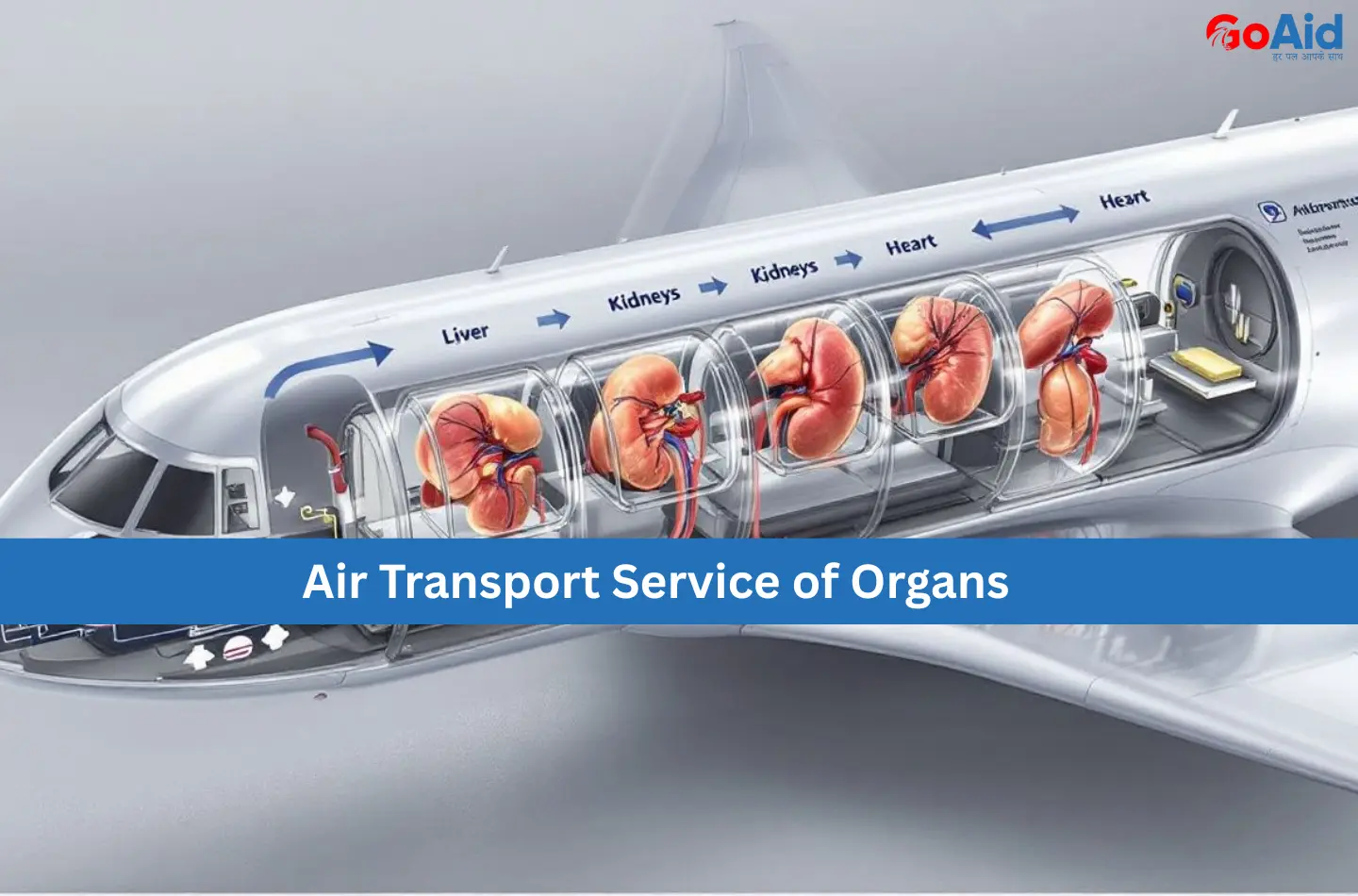
Air Transport Service of Organs
Organ transplantation is one of the most time-sensitive medical procedures, where every minute plays a crucial role in saving lives. Especially in cases of heart and lung transplants, delayed transport can reduce organ viability and impact transplant success.
This is why, in this blog, we have added all the details and key information related to the Air Transport Service of Organs. This includes the importance of time in organ transportation, heart and lung air transfer requirements, organ transplant air logistics, safety and preservation protocols, coordination between hospitals and airports, and how GoAid Ambulance Service supports critical organ donation missions.
Are you excited to know all these details? Then don’t just wait! Read our blog till the end to get the information you need the most.
So, let’s start–
Importance of Time in Organ Transplant Transportation
In organ transplantation, time is the most critical factor that directly impacts organ viability and patient survival.
1. Limited Preservation Time of Donor Organs
Donor organs like the heart and lungs have very short preservation windows. Air Transport Service of Organs ensures rapid movement. This makes time-critical organ movement possible before irreversible damage occurs.
2. Heart Transplants Require Ultra-Fast Transportation
The heart can survive only a few hours outside the body. Heart transport by air ambulance significantly reduces transit time. This ensures successful transplantation through reliable organ transplant air logistics.
3. Lungs Are Extremely Sensitive to Delays
Lungs are highly vulnerable to oxygen deprivation and contamination. Lung transplant air transfer using specialized medical charter services ensures controlled environments and rapid delivery to transplant centers.
4. Faster Transport Improves Transplant Success Rates
Shorter transportation times directly improve transplant outcomes. Air ambulance for organ donation minimizes delays. This enhances survival rates and post-transplant recovery for recipients.
5. Reduces Risk of Organ Deterioration
Delays can lead to tissue damage and organ rejection. Air Transport Service of Organs ensures continuous temperature control and rapid transit, protecting organ quality during time-critical organ movement.
6. Enables Interstate and Long-Distance Organ Transfers
Many donor-recipient matches occur across states. Organ transplant air logistics supported by GoAid Ambulance Service make interstate transfers fast, efficient, and medically safe.
7. Supports Green Corridor Coordination
Time-efficient air ambulance for organ donation works alongside green corridors for ground movement. This ensures uninterrupted end-to-end time-critical organ movement from donor to recipient hospital.
8. Ensures Compliance with Transplant Timelines
Organ transplant protocols have strict timelines. Medical charter services help hospitals meet these deadlines through planned and precise Air Transport Service of Organs operations.
9. Saves Lives Waiting on Transplant Lists
For patients awaiting heart or lung transplants, every minute counts. Heart transport by air ambulance and lung transplant air transfer can mean the difference between life and death.
10. Enhances National Organ Sharing Efficiency
Efficient Air Transport Service of Organs strengthens national transplant networks. With advanced organ transplant air logistics, GoAid Ambulance Service supports faster, safer, and more reliable organ transportation across India.
How Does the Air Transport Service of Organs Work?
The Air Transport Service of Organs follows a precise, time-bound process to ensure safe and rapid organ delivery.
1. Donor Organ Identification and Medical Clearance
The process begins with donor organ identification and medical approval. Transplant teams coordinate with GoAid Ambulance Service to initiate organ transplant air logistics for safe and time-critical organ movement.
2. Rapid Coordination Between Hospitals and Authorities
Once approval is granted, hospitals, transplant coordinators, and aviation teams align instantly. This coordination enables smooth Air Transport Service of Organs. This ensures no delays in heart transport by air ambulance or lung transplant air transfer.
3. Organ Packaging and Preservation Protocols
Donor organs are preserved in temperature-controlled sterile containers. These strict protocols protect organs during air ambulance for organ donation. This maintains viability throughout time-critical organ movement.
4. Medical Charter Aircraft Readiness
Specialized medical charter services are deployed for organ transport. Aircraft selection depends on distance and urgency. This enables efficient Air Transport Service of Organs across cities and states.
5. Secure Air Transport and In-Flight Monitoring
During flight, trained personnel monitor preservation conditions. Organ transplant air logistics ensure stable temperature and handling during heart transport by air ambulance and lung transplant air transfer.
6. Ground Ambulance and Green Corridor Integration
On landing, ground ambulances and green corridors are pre-arranged. This integration ensures uninterrupted air ambulance for organ donation. This minimizes transfer time during time-critical organ movement.
7. Safe Handover to Transplant Surgical Team
The final step involves secure handover to the transplant team. GoAid Ambulance Service ensures complete documentation and timely delivery, completing the Air Transport Service of Organs efficiently and safely.
What are Critical Medical Requirements for Heart and Lung Transport
Successful Air Transport Service of Organs for heart and lung transplants requires specialized equipment, trained personnel, and strict adherence to preservation protocols.
1. Temperature-Controlled Sterile Containers
Heart transport by air ambulance and lung transplant air transfer require organs to be stored in temperature-controlled sterile containers. This ensures viability during time-critical organ movement and organ transplant air logistics.
2. Continuous Monitoring of Organ Conditions
Critical organs need constant monitoring of temperature, humidity, and handling. Air ambulance for organ donation includes in-flight observation to maintain optimal conditions throughout Air Transport Service of Organs.
3. Trained Medical Personnel Onboard
Specialized doctors, perfusionists, and paramedics accompany organs. GoAid Ambulance Service ensures experts manage heart transport by air ambulance and lung transplant air transfer during time-critical organ movement.
4. Rapid Pre-Flight Preparation
All medical supplies, preservation fluids, and emergency kits are prepared in advance. This step is crucial for efficient organ transplant air logistics and reliable air ambulance for organ donation.
5. Secure Packaging and Handling Protocols
Organ containers are securely fastened and handled with care. Strict protocols prevent damage during Air Transport Service of Organs. This enables safe heart transport by air ambulance and lung transplant air transfer.
6. Backup Life-Support and Equipment
Air ambulances carry backup refrigeration, oxygen, and monitoring devices. This redundancy ensures time-critical organ movement is uninterrupted during organ transplant air logistics.
7. Compliance with Legal and Medical Guidelines
All Air Transport Service of Organs follow government regulations and transplant authority guidelines. This ensures legal, ethical, and safe air ambulance for organ donation operations.
8. Coordination with Donor and Recipient Hospitals
Uninterrupted communication between sending and receiving teams is vital. GoAid Ambulance Service manages hospital coordination for smooth heart transport by air ambulance and lung transplant air transfer.
9. Green Corridor and Ground Support Prepared
Integration with ground transport ensures fast delivery. Air ambulance for organ donation uses green corridors to minimize delays during time-critical organ movement.
10. Real-Time Tracking and Updates
Every step of organ transplant air logistics is tracked in real time. Families and hospitals receive updates during Air Transport Service of Organs. This ensures transparency and safety in heart transport by air ambulance and lung transplant air transfer.
Key Role of Air Ambulances in Organ Donation Missions
Air ambulance for organ donation plays a critical role in ensuring fast, safe, and efficient delivery of organs for transplant across India.
1. Rapid Transport for Time-Critical Organs
Air Transport Service of Organs allows fast movement of donor organs like the heart and lungs. Air ambulance for organ donation ensures time-critical organ movement. This enhances transplant success rates.
2. Nationwide Coverage for Organ Transfers
Organ donors and recipients are often in different states. GoAid Ambulance Service provides organ transplant air logistics. This enables swift interstate heart transport by air ambulance and lung transplant air transfer.
3. Advanced Medical Equipment Onboard
Air ambulances are equipped with temperature-controlled containers, monitoring devices, and backup systems. This ensures safe Air Transport Service of Organs during time-critical organ movement.
4. Trained Medical Teams for Organ Care
Specialized medical personnel monitor organs during transit. GoAid Ambulance Service deploys experts for heart transport by air ambulance and lung transplant air transfer. This maintains viability throughout the mission.
5. Coordination with Donor and Recipient Hospitals
Air ambulances enable uninterrupted communication between hospitals. Air ambulance for organ donation ensures organ transplant air logistics with pre-arranged protocols, green corridors, and ready surgical teams.
6. Minimization of Transit Delays
By reducing travel time compared to road transport, Air Transport Service of Organs ensures time-critical organ movement. GoAid Ambulance Service optimizes flight routes for fastest delivery.
7. Safe Handling During Transit
Air ambulances follow strict protocols to prevent organ damage. Heart transport by air ambulance and lung transplant air transfer include secure packaging, constant monitoring, and in-flight stabilization.
8. Enhances Organ Preservation
Maintaining ideal temperature, humidity, and oxygen conditions is crucial. Air ambulance for organ donation ensures organs remain viable during organ transplant air logistics.
9. Supports Emergency Organ Retrieval
In sudden donor availability, GoAid Ambulance Service enables immediate Air Transport Service of Organs. This makes heart transport by air ambulance and lung transplant air transfer feasible under tight timelines.
10. Improves Transplant Success Rates
Timely, well-coordinated air ambulance for organ donation enhances patient survival. Efficient organ transplant air logistics with GoAid Ambulance Service ensures organs reach recipients quickly, maximizing transplant outcomes.
Need of the Coordination between Hospitals, Airports, and Medical Teams
In Air Transport Service of Organs, precise coordination between hospitals, airports, and medical teams is critical. Donor and recipient hospitals must synchronize to ensure organ retrieval and transplantation occur within tight timeframes.
Airports coordinate flight schedules, customs, and green corridors for quick transit, while medical teams handle packaging, monitoring, and in-flight care. Without uninterrupted collaboration, time-critical organ movement can be delayed, jeopardizing organ viability.
GoAid Ambulance Service ensures all parties are aligned, from donor hospital preparation to in-flight medical supervision, and final handover to the recipient surgical team. This integrated approach is essential for safe heart transport by air ambulance and lung transplant air transfer.
What are Key Safety and Preservation Protocols that Used During Organ Transport?
Strict safety and preservation protocols are vital in Air Transport Service of Organs. This ensures organs arrive viable and ready for transplantation.
1. Temperature-Controlled Organ Containers
Organs are transported in sterile, temperature-controlled containers. This air ambulance for organ donation protocol preserves the organ’s viability during heart transport by air ambulance and lung transplant air transfer.
2. Continuous Monitoring During Transit
Vital conditions such as temperature, humidity, and oxygen are continuously monitored. GoAid Ambulance Service ensures real-time observation for time-critical organ movement during organ transplant air logistics.
3. Secure Packaging and Handling
Organs are carefully secured to prevent movement or damage. Proper handling protocols are crucial for safe air ambulance for organ donation and efficient heart transport by air ambulance.
4. Use of Backup Equipment
Backup refrigeration and monitoring devices are standard in organ transplant air logistics. This ensures uninterrupted support during lung transplant air transfer and time-critical organ movement.
5. Sterility and Infection Control
Strict hygiene protocols prevent contamination. Air Transport Service of Organs follows sterilization procedures to protect organs during air ambulance for organ donation.
6. Pre-Flight Coordination
Hospitals, aviation teams, and ground transport are synchronized before takeoff. This coordination enables smooth organ transplant air logistics for both heart transport by air ambulance and lung transplant air transfer.
7. Rapid Ground Handover at Destination
Upon landing, organs are immediately handed to surgical teams using green corridors. GoAid Ambulance Service ensures quick and safe time-critical organ movement from aircraft to operating room.
How Does the GoAid Ambulance Support Organ Air Transport?
GoAid Ambulance Service plays a pivotal role in Air Transport Service of Organs. This provides end-to-end solutions for heart transport by air ambulance and lung transplant air transfer. Their services include rapid deployment of medical charter services, NICU-style monitoring for sensitive organs, and trained medical teams to manage time-critical organ movement.
GoAid coordinates with donor and recipient hospitals, airports, and ground transport to ensure green corridor integration and uninterrupted handover. Equipped with advanced preservation systems, temperature-controlled containers, and backup support, GoAid ensures every organ reaches its destination safely and on time, maximizing transplant success rates through reliable air ambulance for organ donation and expert organ transplant air logistics.
Conclusion
In conclusion, we have provided you all details about the Air Transport Service of Organs. This covers the importance of time-critical organ movement, specialized air ambulance for organ donation, and the role of GoAid Ambulance Service in ensuring safe and rapid delivery of heart and lung organs.
From advanced preservation protocols, NICU-style monitoring, and trained medical teams to uninterrupted hospital and airport coordination, every step is designed to maximize transplant success. Choosing reliable organ transplant air logistics like GoAid ensures timely, secure, and efficient heart transport by air ambulance and lung transplant air transfer across India.
FAQs
Q1: What is the Air Transport Service of Organs?
A: The Air Transport Service of Organs involves rapid transfer of donor organs like the heart and lungs via specialized air ambulance for organ donation. GoAid Ambulance Service ensures safe, time-critical organ movement. For assistance, call 8008280020.
Q2: How fast can GoAid arrange organ transport?
A: GoAid Ambulance Service operates 24/7 and can quickly deploy medical charter services for heart transport by air ambulance and lung transplant air transfer. Immediate coordination ensures organs reach recipients on time. Contact 8008280020 for urgent requests.
Q3: Who is part of the organ transport medical team?
A: Trained specialists. This includes transplant doctors, perfusionists, and paramedics, accompany organs during organ transplant air logistics. They monitor vital conditions throughout air ambulance for organ donation to ensure safe time-critical organ movement.
Q4: What preservation methods are used during transport?
A: Organs are kept in temperature-controlled sterile containers with continuous monitoring. GoAid Ambulance Service ensures heart transport by air ambulance and lung transplant air transfer maintain viability using advanced Air Transport Service of Organs protocols.
Q5: Does GoAid provide nationwide organ transport services?
A: Yes, GoAid Ambulance Service offers nationwide coverage for air ambulance for organ donation. This ensures efficient organ transplant air logistics for heart transport by air ambulance and lung transplant air transfer across India.
Q6: How does GoAid coordinate between hospitals and airports?
A: GoAid Ambulance Service manages end-to-end coordination. This includes donor and recipient hospitals, airport logistics, and ground green corridors. This ensures timely time-critical organ movement and smooth air ambulance for organ donation operations.
Q7: How can I book GoAid organ transport services?
A: Booking is simple, call 8008280020 anytime. GoAid Ambulance Service provides guidance, rapid deployment, and expert air ambulance for organ donation support for safe heart transport by air ambulance and lung transplant air transfer.