GoAid air ambulance pre-flight medical checks
There are people who have never book any air ambulance in their life. It could either be of their financial conditions or of their unawareness. But those who do it for the first time, usually don’t have any idea about what happens before takeoff of an air ambulance.
This is why we have explained this topic though this blog to make you aware of all those procedures and followed pre-flight medical checks!
This is why, in this blog, we have explained all the details about evaluation of patient health before air transfer, medical clearance about fitness to fly assessment, key things that gets into check before takeoff and more. Do you want to know all these information in detail? Then read this blog to the end.
So, let’s start:
How Is Patient Health Evaluated Before Air Transfer?
Before any air ambulance flight, evaluating the patient’s health is one of the most critical steps. This process ensures that the patient is medically stable, fit for air travel, and can safely withstand altitude changes and in-flight conditions.
1. Initial Medical Condition Assessment
GoAid doctors first review the patient’s current medical condition, diagnosis, and symptoms. This helps determine the severity of illness or injury and whether emergency air ambulance India services are clinically justified for the patient’s situation.
2. Review of Vital Signs and Stability
Key vital parameters such as blood pressure, heart rate, oxygen saturation, and respiratory status are carefully monitored. Stable vitals are essential for air ambulance pre-flight medical checks to ensure safe medical evacuation.
3. Evaluation of Medical History
The GoAid air medical team reviews the patient’s medical history. This includes chronic illnesses, recent surgeries, allergies, and medications. This helps anticipate complications and plan appropriate air medical safety protocols.
4. Assessment of Oxygen and Ventilation Needs
Doctors assess whether the patient requires oxygen support, non-invasive ventilation, or a ventilator. This step ensures the aircraft is prepared with the right life-support systems for medical evacuation by air ambulance.
5. Risk Assessment for Altitude and Cabin Pressure
Patients are evaluated for conditions that may worsen at altitude, such as cardiac, respiratory, or neurological issues. This assessment is vital for maintaining patient safety during air ambulance transfer.
6. Fitness-to-Fly Medical Clearance
Based on clinical findings, GoAid doctors decide if the patient is fit to fly. This formal clearance is a crucial part of air medical safety protocols before confirming the flight.
7. Transfer Planning and Care Customization
Finally, the medical team plans in-flight care, medications, and monitoring needs. This ensures the GoAid air ambulance service delivers continuous, customized medical care from takeoff to hospital handover.
What Does Medical Clearance and Fitness-to-Fly Assessment Involve?
Medical clearance and fitness-to-fly assessment are essential steps before confirming any air ambulance transfer. These checks ensure that the patient can safely tolerate air travel conditions such as altitude changes, cabin pressure, and extended transport time.
1. Detailed Clinical Evaluation by Doctors
GoAid doctors conduct a thorough clinical evaluation to understand the patient’s diagnosis, current condition, and treatment needs. This helps determine whether medical evacuation by air ambulance is appropriate and safe.
2. Risk Analysis for Air Travel Conditions
The medical team assesses risks related to altitude, cabin pressure, and oxygen levels. Patients with cardiac, respiratory, or neurological conditions are carefully evaluated under air ambulance pre-flight medical checks.
3. Review of Current Treatment and Stability
Doctors review ongoing medications, IV lines, ventilator support, or monitoring requirements. This ensures continuity of care during the GoAid air ambulance service flight without medical interruptions.
4. Consent and Medical Documentation Verification
All required medical records, doctor notes, and patient or family consent are reviewed. Proper documentation is a mandatory part of air medical safety protocols before approving air transfer.
5. Final Fitness-to-Fly Approval
After reviewing all parameters, GoAid doctors issue a formal fitness-to-fly clearance. This approval confirms that the patient can safely undergo medical evacuation by air ambulance.
How Are Pre-Flight Medical Equipment and Life-Support Systems Checked?
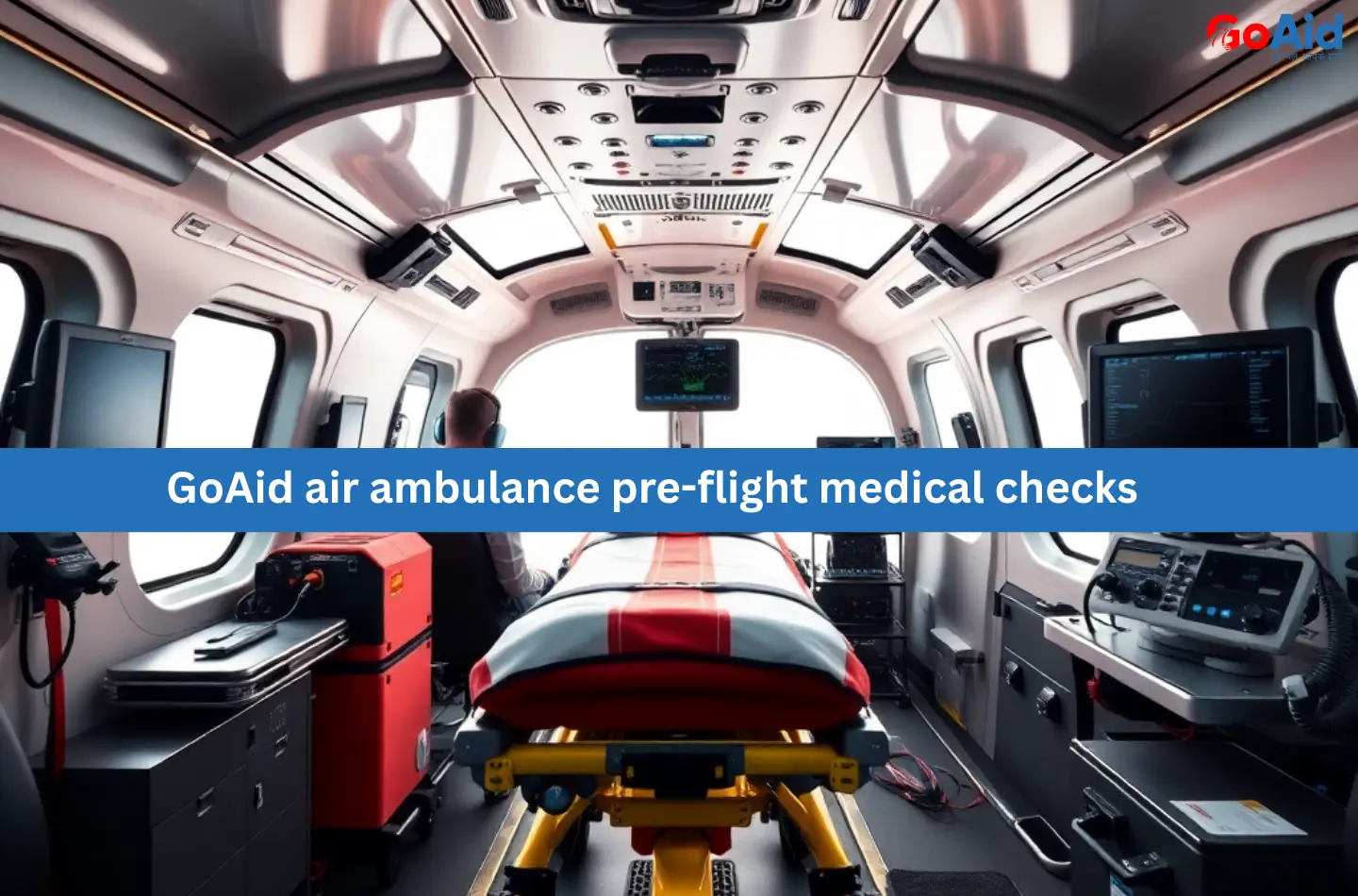
Before takeoff, GoAid air ambulance service follows a detailed and systematic inspection of all medical equipment and life-support systems. These checks ensure that the aircraft is fully prepared to handle critical care needs throughout the flight.
Every piece of equipment is tested to meet air medical safety protocols and emergency air ambulance India standards. Ventilators, monitors, infusion pumps, and defibrillators are checked for functionality, battery backup, and compatibility with aircraft power systems.
Oxygen cylinders are inspected for adequate pressure, secure fittings, and uninterrupted supply for the entire duration of medical evacuation by air ambulance. Backup oxygen sources are also kept ready.
Medical teams verify suction units, airway management tools, emergency drug kits, and IV supplies to ensure immediate response in case of patient deterioration. Power supply systems are tested to confirm uninterrupted switching between aircraft power and battery support.
Sterilization and infection control checks are conducted to maintain a safe environment, especially for immunocompromised or ICU-level patients. Finally, all equipment is cross-verified against the patient’s medical needs. This ensures the GoAid air medical team can deliver uninterrupted, high-quality care from takeoff to landing.
What Is the Role of GoAid Doctors and Paramedics Before Takeoff?
Before an air ambulance departs, GoAid doctors and paramedics play a critical role in ensuring patient safety and readiness.
1. Final Patient Health Reassessment
Doctors reassess the patient’s condition to confirm stability before boarding. This step ensures air ambulance pre-flight medical checks are accurate and up to date.
2. Confirmation of Fitness-to-Fly Clearance
The GoAid air medical team verifies that all fitness-to-fly approvals are in place. This ensures compliance with emergency air ambulance India guidelines.
3. Stabilization of the Patient Before Transfer
Paramedics stabilize vital signs, secure IV lines, and manage pain or anxiety. This ensures safe medical evacuation by air ambulance.
4. Coordination with Ground Ambulance Teams
Doctors coordinate with ground ambulance staff to ensure smooth patient movement from hospital to aircraft without delays.
5. Equipment Matching with Patient Needs
Medical teams confirm that ventilators, monitors, and oxygen systems match the patient’s condition and flight duration.
6. Medication Review and Preparation
All required medications are reviewed, prepared, and labeled for in-flight use. This supports continuous care during GoAid air ambulance service.
7. Emergency Scenario Planning
Doctors plan for potential complications such as cardiac events or respiratory distress, following strict air medical safety protocols.
8. Communication with Receiving Hospital
The GoAid air medical team updates the destination hospital about patient condition and arrival time for uninterrupted handover.
9. Infection Control and Safety Checks
Paramedics ensure hygiene, sterilization, and patient isolation measures are followed before boarding the aircraft.
10. Final Pre-Takeoff Medical Clearance
Just before takeoff, doctors give the final medical go-ahead. This confirms the patient is safe for air travel and continuous monitoring.
How Does GoAid Coordinate with Hospitals and Ground Ambulance Services?
Effective coordination with hospitals and ground ambulance services is a crucial part of GoAid air ambulance operations. Before takeoff, the GoAid air ambulance service communicates with the referring hospital to understand the patient’s condition, treatment plan, and readiness for transfer.
Simultaneously, the receiving hospital is informed about the patient’s medical status, estimated arrival time, and ICU or specialist requirements.
Ground ambulance services are coordinated to ensure timely patient pickup and drop-off without delays. Medical records, reports, and consent documents are shared in advance to avoid last-minute issues.
This uninterrupted coordination ensures uninterrupted medical evacuation by air ambulance, reduces transfer time, and maintains continuity of care throughout the journey.
Conclusion
In conclusion, we have provided all the details about what happens before takeoff in GoAid air ambulance pre-flight medical checks. From patient health evaluation and fitness-to-fly clearance to medical equipment inspection, team readiness, and coordination with hospitals and ground ambulances, every step follows strict air medical safety protocols.
These processes ensure that emergency air ambulance India services remain safe, reliable, and efficient. Understanding these pre-flight procedures helps patients and families feel confident that medical evacuation by air ambulance is carefully planned, medically supervised, and focused on delivering the highest level of patient care.
FAQs
Q1: What are air ambulance pre-flight medical checks?
A: Air ambulance pre-flight medical checks include evaluating patient stability, reviewing medical history. This confirms fitness-to-fly clearance, and inspecting life-support equipment. These checks ensure safe medical evacuation by air ambulance and reduce risks during emergency air ambulance India transfers.
Q2: Who conducts pre-flight checks in GoAid air ambulance service?
A: Pre-flight checks are conducted by experienced GoAid doctors and paramedics. The GoAid air medical team follows standardized air medical safety protocols to assess patient condition, verify medical readiness, and ensure equipment functionality before takeoff.
Q3: Why is patient fitness assessed before air medical transfer?
A: Patient fitness is assessed to ensure the individual can tolerate altitude changes, cabin pressure, and flight duration. This evaluation minimizes medical risks and ensures safe emergency air ambulance transfers with continuous medical support.
Q4: What medical equipment is checked before air ambulance takeoff?
A: Medical equipment checked includes ventilators, monitors, oxygen systems, infusion pumps, defibrillators, suction units, and emergency drug kits. These checks ensure uninterrupted critical care during medical evacuation by air ambulance.
Q5: How does GoAid ensure safety during emergency air ambulance flights?
A: GoAid ensures safety through strict pre-flight medical checks, experienced medical teams, reliable life-support equipment, and uninterrupted coordination with hospitals and aviation authorities, following established air medical safety protocols at every stage.